Thursday, August 14, 2014

WILTIMS #164: My thumb hurts

The ever exciting med school flag football season has started up at my school, and after some crazy team-trading drama, we had our first game today. Predictably, I quickly hurt myself by jamming my thumb into someone's hip while reaching for a flag. Jamming is a technical term...

Later in the game as our artificially high score passed 100, I turned to a teammate and, while still rubbing my sore thumb, exclaimed, "Wow, I think we just broke three digits!"

I immediately knew I should have phrased that differently when he looked with a shocked expression down at my hand. Only at a med school flag football game, would he think I was casually commenting on breaking three fingers.

TIL: Red blood cells actually participate in the body's immune response via the complement system. Though they have no nucleus and are generally pretty useless, red blood cells express complement receptors which can bind to antigen fragments and bring them to the liver or spleen, where they are taken up by macrophages for incorporation into the adaptive immune response.

Of course, red blood cells also cause the immune system some problems too; they do not have the ability that most other cells do that tells the immune system they are infected. It's like a bank without a silent alarm and malaria is the crook that has cased the joint. Once inside, malaria is invisible to the immune police. The silent alarm in this case is major histocompatibility complex (MHC) class II, which displays pieces of an infectious agent, alerting the immune system to the infection (and begging for a mercy killing).

Also, it is loosely estimated that there is a 1% decrease in renal function per year after the age of 25. Woohoo, still 98% functioning!

WILTIMS #163: ♪♫♪ Always look on the bright side of death... ♫♪♫

Today was the fourth introductory class of the week with the inaugural microbiology/immunology lecture. The professor took an hour to go over all the ways that micro inserts itself into current events. By the end of that period, I was pretty convinced that we were all going to die tomorrow of excruciatingly painful infections transmitted by bugs, bats, people, poultry and everything I eat.

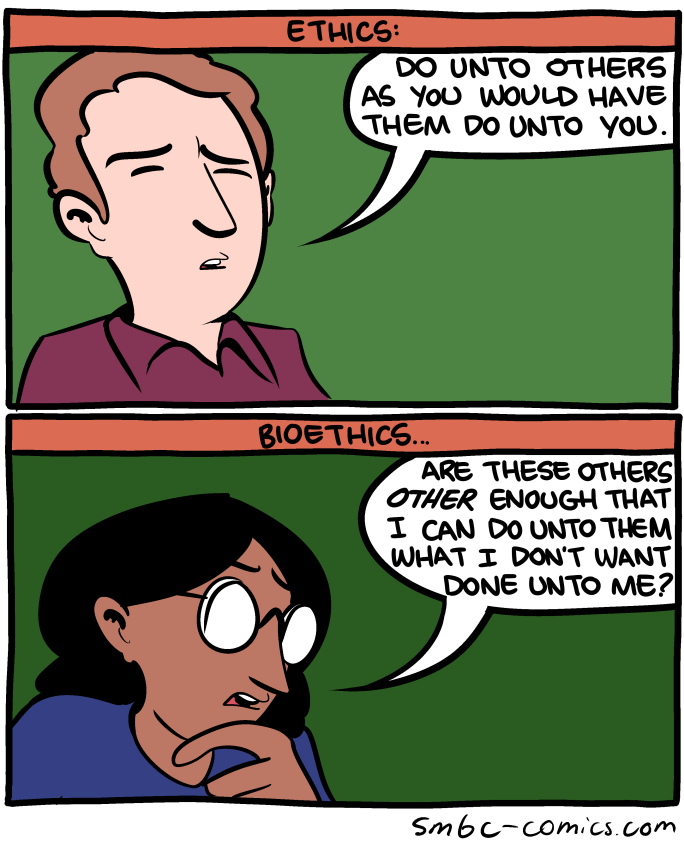
This afternoon there was an optional talk by our chancellor on the history of eugenics and the ethics of medicine performed during the holocaust. It was a wonderful, if depressing, presentation. The takeaway was not to write off these travesties because they, the Nazis, did it and we, wholesome Americans, would never do such things. Eugenics was born out of science and championed by the US and Britain. They sent delegations to copy our state laws on involuntary sterilization. Germany just took our ideas to one logical (though horrific) endpoint. 

And doctors were some of the worst offenders. German doctors were the first to fulfil Hitlers mandate to euthanize undesirables by starving children. When this bothered some of the doctors' sensibilities, they devised a system to trick patients into a large tile room with a fake showerhead that would release carbon monoxide for a faster, less painful mass-killing. When war broke out on the eastern front and Germany needed a way to kill of millions of people, they simply scaled up the design and borrowed the British concept of concentration camps to store the condemned. The lucky ones were kept alive for medical research purposes.

Like I said, not exactly an upbeat discussion, but a fascinating look at the skeletons in all of our closets. One unsettling thought with which I came away was that though we no longer accept eugenics as an acceptable practice, the basic idea behind the science is still sound. We do pay a price as a society for being compassionate toward the sick, elderly and incarcerated. We could make stronger, smarter, and more pleasant people. We are ok with that in every other species. Why do you think dogs love us and look so weird? Why are horses so good a running and bad at everything else? We did animal-eugenics on them.

But I'd argue that part of what defines our species (at least in this century) is our compassion for everyone, especially the icky parts of society. We could help evolution to advance our species but we choose not to. We'll take the slow path to perfection, if needed. 


TIL: Most people that die from the flu actually die more specifically from secondary pneumonia. The lungs normally are covered in ciliated epithelium that pushes bacteria-ridden mucous out of the respiratory tract and into the esophagus. The flu damages this tissue and allows infectious microbes to flourish in the normally sterile lungs.

Toll-like receptor 4 (TLR4), found on the surface of macrophages, reacts to lipopolysaccharides.

Tuesday, August 12, 2014

WILTIMS #162: Clicking justified

One of the major changes between first and second year at our school is a shift away from purely lecture guided learning (though there is certainly still plenty of that) and towards self-study. The idea being that our professors guide us through the big points but we learn how to best use our time for filling in the gaps. I sometimes feel like we should get some of our tuition back if we're teaching ourselves, but the general idea is sound. We are entering a profession that is constantly changing and we will need to teach ourselves for decades after we graduate.

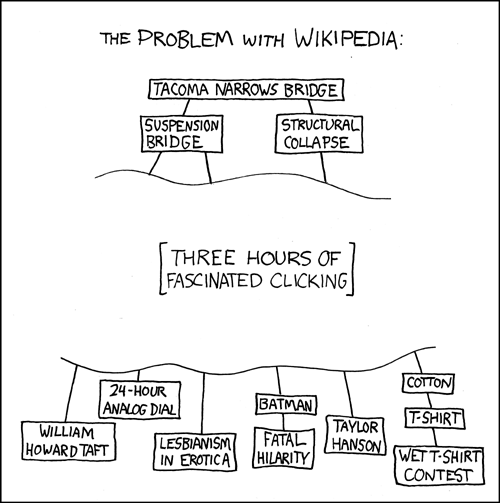
An interesting change for me is that everything I wrote about last year on this blog I learned in lecture. The few members of my class that for whatever reason read my blog in the past almost always had heard the same anecdotes that day in class. This year, there will be things I find on my own, based on my own study schedule and resources. I'm sure when we start clerkships next year, the trend will only continue. In other words, I think I just justified the crazy trips I so often take down the Wikipedia rabbit hole.

TIL: Amyloidosis is diagnosed by applying a Congo red dye to a tissue biopsy of the affected organ (often the kidney) and looking for an apple-green birefringence under polarized light. Birefringence is a special property of a material whereby it can split a beam of light depending on its polarization and direction. Using a complicated polarisation technique on a pathology slide, substances with these properties will shine bright green while the rest of the field is black.

WILTIMS #161: Med School Strikes Back

If first year is the study of the normal body, second year is the study of everything that can go wrong and, if possible, how to treat it. We learn all of these topics first generally, and then organ system by organ system, as pathology/pathophysiology, microbiology/immunology, and pharmacology. ALL the -ologies!

It was surprisingly rough getting back into the swing of things today, even though we didn't learn much in the way of material yet. But as I dust of the mental cobwebs, I remember back to last year, and can barely believe how far I've come.

"Walk this way..."
Last week I helped out with the new first-years' orientation week. In between panels and walking lost students to their lockers, my classmates and I all agreed that it was so refreshing to see students before their spirits are broken by that first couple weeks of lecture - back when the biggest problems were deciding between buying or renting a microscope and finding the nearest grocery store. We quickly learned that these worries were easily drowned out by the flood of information we were being fed. And then we realized that that first test was a laugh compared to the second - and anatomy/histology was a cakewalk compared to even early physiology/biochemistry - and the cardio exam was at a whole 'nother level... and so on.

By the time summer rolled around we understood: med school never gets easier, it only changes form and/or gets harder. But every victory reassured us that we would survive the next challenge. Every "pass" on an exam showed that we had improved beyond our own wildest expectations from just a few months before.

So when today we heard that this would be the hardest semester yet (until the next, that is) and that all of this was a prelude to the ever looming USMLE Step 1 board exam at the end of the year, I could confidently shrug it off. Looking at the lost first-years in whose shoes we stood 12 months ago, I can't wait to see where we stand 10 months from now as we transition to clerkships. Bring it.

Today I Learned (TIL):
Stopping oral steroids cold turkey can be deadly due to adrenal insufficiency.

Hypertrophy is the abnormal growth of a tissue by increasing cell size, as compared to hyperplasia which is abnormal growth due to the production of additional cells. The term atrophy covers the opposite of both hypertrophy and hyperplasia. Metaplasia is the change from one cell type to another. When any sort of change leads to negative enough consequences, it can be called a dysplasia. Dysplasias are reversible, whereas carcinomas (cancers) are not.

Caseous necrosis is the type of cell death seen in tuberculosis. It is named for its morphologic similarity to cheese (latin: caseus = cheese).

Sunday, August 10, 2014

Last Last Summer Post

Phew! Summer just flew by and I have next to no blog posts to show for it. Apologies. The situation will correct itself come Monday when I start second year.

Interspersed with three weddings, a graduation, two trips to the west coast, and moving essentially twice to the Bronx, I have been taking part in a summer research program in the Pediatric Intensive Care Unit at our school's nearby teaching hospital. As I wrote in my previous post, the experience began abruptly and with little formal orientation. At the time it was absolutely terrifying and the trend of frantically scrambling through my ignorance to meet deadlines never abated. But this frenetic pace was great at pushing me to work and learn when all I really wanted to do was sleep, consume internet memes and allow my brain to regain its natural state of ooze.

Here are some broad takeaways from my dabbling in research:
  • Hospital bureaucracies are vast and vogonic: You not only need to turn in the right forms to the right people, but also with the right attitude and 25 paper copies to get anything done with research. I fully understand that review boards protect patients and subjects alike and are a valuable part of the research process. But it seems that, due to being continually force-fed research that has been spun by the writers to seemingly be the greatest achievements in medicine, some of the people we deal with are so jaded that they deliberately put up roadblocks to innocuous requests because of harmless missteps in protocol.
  • Resident physicians make surprisingly terrible subjects: Residents are newly graduated doctors, so they are necessarily smart, science savvy and knowledgeable about the benefits of research. However, they are also super-crazy busy and asking them to do even the most innocuous task might seemingly break their very tenuous hold on sanity. Our project required maybe 15 seconds of each resident once every few days. We went out of our way to position everything as conveniently as is humanly possible. Despite all of our conciliatory efforts, a month and a half into the study we only have about 50% participation, a number with which my adviser is actually really pleased.
  • Residents are amazing: I got to work with a couple of residents on my project and it was absolutely incredible that they could manage extracurricular research on top of the 16-hour shifts (which rarely ended on time). These are doctors but they barely know what they're doing and yet they are directly responsible for the lives of direly ill children (don't worry, they have lots of supervision). The couple times I attended morning rounds in the PICU, it was amazing watching the residents present their patients to the attending. They can typically hit 95% of the important facts but they are always learning to be better. And there is so much to learn.
  • Attendings are amazing, and I want to be one: And on the receiving end of rounds are the attendings, the real doctors. These are the board certified head honchos of the hospital world. They are responsible for everything the residents do and learn. And when things go wrong, not that the residents could have prevented the wrong-going, the residents and nurses call in the scrub-wearing cavalry. Seeing the attendings go to work is amazing, especially in the acute settings that the PICU provides, in part because of the calm way that they take charge of potentially chaotic situations. This is what entices me about critical care and has put this rather vague sub-specialty high on my list of potential careers.
Overall, I had a great time with this summer opportunity and though this is the end of my core involvement with the project, I will be doing small and eventually bigger things with this research in the coming years. If you are a frequent reader of this blog, expect periodic updates as the project progresses.

Now I'm off to enjoy the last stress-free night's sleep of summer! I'm looking forward to (and already planning out) my first post of the year for tomorrow night. See you then!*

*I will not see you and you will not see me, but you might read more words that I have haphazardly collected in blog form.

Friday, June 20, 2014

First Last Summer Post

So begins my last summer. No, I'm not moving north of the Wall or foretelling my untimely demise. This is the last summer break I will get as a student. And like many med students, I'm voluntarily spending it productively and merely dreaming of the exotic destinations to which my wiser classmates have ventured. Earlier this week I, rather abruptly, started my summer clinical research "program" in the Pediatric Intensive Care Unit (PICU) at the local children's hospital. I hesitate to use the term program because that implies that there is some sort of plan, schedule or central organizing force. Like any great adventure, mine seems decidedly unscripted.

On Wednesday, I met with my primary advisor and was promptly told to create a ten minute presentation for the next morning to present to the twenty or so second year residents (doctors four years my senior)... and this presentation would be at the house of the pediatric residency director for the hospital... on a research project about which I only had cursory knowledge. Given the situation and the resultant lack of sleep, it went pretty well. Of course the audience wasn't exactly the most receptive I've ever had, as the project essentially creates slightly more work for some of the most overworked people in medicine. Rough crowd.

Thankfully, this summer experience is not all research based. At that first meeting with my project's PI, or principal investigator, I was also told that the entire PICU was open to me. I can attend morning rounds, departmental lectures, and unit meetings. I can shadow the residents and generally lurk about the unit as much as I want. I took my first opportunity at this this morning and joined the residents and their attending physician on morning rounds.

For the uninitiated, morning rounds are a daily exercise at teaching hospitals wherein the team of doctors physically tours the unit one bed at a time, discussing updates on the condition and current treatment plan for each patient. If you've ever been a patient or family member visiting during these early morning hours, you know it can be quite the imposing experience. In an ICU such as ours, the rooms are all private and open to the unit with huge glass double doors. The doctors stand in a semicircle around the door and talk to each other in a foreign language of acronyms, numbers, and medical terminology. The resident in charge of the patient gives a report to the attending with the help of the patient's current nurse. The attending gives his or her advice and pounces on every teaching opportunity to reinforce (or refute) with real life experience all the knowledge the young doctors have learned from books and classes.

The patient and their family are briefly greeted but this visit is not for them. This is the only time each day that all of the doctors are in the same place at once and there's no time to translate. As I am not nearly fluent myself, I spent most of my time this morning taking in the scene and watching the interactions of the players. The most interesting people were the parents. The ones with kids with chronic conditions smiled when we came by and politely listened. You could see them nod with recognition when they heard the key words that were important yesterday or a year ago during their last admission. The doctors also know that experienced parents can be valuable experts in their children's conditions and will ask their opinions.

The hardest part was watching the novice parents, having been thrust into this sterile world by a tragic accident or life-altering diagnosis. To them the words are useless; each could mean their child's salvation or condemnation, but they can't tell which. Instead they are doing the same as me and watching faces. Every sign of frustration or resignation from the doctors causes them physical pain. In teary desperation they seem to silently plead for someone to tell them it will be alright, if only so that they can more honestly whisper the same to their unconscious child.

People often ask how doctors and nurses can stand working in this world of innocent lives torn apart, possibly to never be put back together again. The best response I've heard is that it is these the patients who are most worth fighting for. I'd rather spend my energy on an innocent child with a full life of potential than, for instance, an elderly patient suffering from a self imposed ailment, even if the outcome is potentially more tragic with the child.

I'm looking forward to exploring more about the PICU and clinical research this summer and periodically sharing my existential musings with you. Thanks for reading!

Friday, June 13, 2014

First year follow-up

It's official! I survived first year.


Apologies for the delayed update, but unsurprisingly life continued to be super-crazy-busy even after classes ended. After some well deserved revelry, I sat down to review the year for this post.

My first stop was my first post - nothing special, just moving in. This gave me the brief hope that I might be able to peruse my way through the year and share my favorite moments. O, how wrong I was. Turns out that I wrote quite a bit through the last year. I would try to add up the word count... but I'm not going to.

I also learned an enormous amount of information. Given that I only wrote between one and maybe five facts a day, but learned was taught between a few dozen and a few hundred (I wish I were exaggerating) bits of information, it truly is an incredible accomplishment to simply survive a year. That being said, I am far prouder of my growth outside of the hippocampus (the brain structure central to memory consolidation).

My admittedly robust ego took so many hits in this year-long bout that I worried it might not get back up off the mat. Like a muggle-born kid from Hogwarts, I was often completely lost with things that other in-the-know students had learned years ago, either from parents or previous experience. For example: always assume you should wear a tie to a neurosurgery conference. Blood pressure cuffs do not, in fact, require three hands to hold. And always double-check the gender of your cadaver*.

I have also never been more stressed and generally miserable than during finals for the last two blocks. Most of you who know me know that I don't stress out easily. But excluding some of the worst days dealing with my own or my family's health problems, I've never been less happy than in the days before a test that could determine if get to continue this torture into the next block or the next year.

This is a subtle but important distinction. Even though, if I'm honest, I was afraid of being judged by my classmates, or failing the expectations of my family, or falling further behind my friends who are further in their education than I, my main motivation for passing my exams was getting to continue all the crazy, challenging, AMAZING things I get to do and learn every day at this school. I get to unravel the mysteries of the very body that allows to me unravel mysteries. I am (slowly) learning how to save lives not ten years after I was learning to heat up the "butter" they put on your popcorn at the theater.

I am so grateful for the privilege to be here and want to thank everyone who helps me get through the low days so that I can revel in the excitement of the exceptional ones. Thank you all again for reading!

* You may notice that my cadaver's gender as written in my posts went from male to genderless to female. When she was first introduced to us and throughout the first few sessions, the head and lower body were covered. Some combination of natural flat-chestedness and age-related tissue atrophy gave both the second-year who introduced us to the body, and my dissection group, the false impression of a male body. When the other group that shared our body started using female pronouns we were very confused before being very embarrassed.