Showing posts with label neurosurgery. Show all posts

Sunday, June 12, 2016

WILTIMS #500-501: Happy Un-anniversary! (Un-niversary?)

This is my 500th What I Learned Today In Med School post! Yay! Well... actually this is only my 372nd post, because of all of my lazy, multi-day catch-up posts (like this one).

Ok, but it's my 500th WILTIMS fact! Woohoo! Um... not quite. I've actually posted way more than 500 facts because some days are just too interesting (like Thursday).

How about it's the end of third year?! Now that's a reeeeal stretch. I have a week left of normal clerkship days then a shelf exam next Friday. And thanks to board exams and whatnot, fourth year really won't start for months.

If anything this is a perfect example of how, if you choose a career in medicine, the milestones along the way are very arbitrary. Right now on our campus, because the various academic calendars don't line up, there are two second-year classes and one third-year class, but no first- or fourth-years. Our newly-grads are now technically doctors, but they're not board certified to practice anything yet and won't be for years.

But this is the way it should be. There are lots of blurry lines as large teams of practitioners add and lose members. Everyone is always growing and moving on to new, but similar things. We are never done. In fact the end goal is just to keep learning, to keep practicing medicine.

ThursdayIL: If a significant neck injury requires it, fusing the base of the skull to the top of the spine (occiput to C1 fusion (or the far cooler sounding: atlanto-occipital assimilation)) will protect the spine but lock the patient's head at a certain angle and orientation. You've got to be very careful where you point the head during that surgery, or the patient will always be looking at the sky or their feet or sliiiiightly of the the left.

The three most common groups who get spinal cord injuries are:
1) 16-25 year old males who get into motor vehicle accidents
2) >65 year old people who fall
3) Gunshot wound victims from urban centers

FridayIL: The common fibular (aka peroneal) nerve is very bulky right around where it splits into the deep and superficial fibular nerves. Unfortunately this spit often happens right over the head of the fibula. If this area gets injured or inflamed it can pinch off that nerve causing pain, numbness and weakness. To alleviate the pressure, you cut the connective tissue along the nerves in both directions. But that knot at the bifurcation is still sitting on that bone. So what you can do is divide the nerve all the way up the leg. Since all the nerve fibers are running parallel, nothing is damaged. It's actually exactly like when your old headphones are a little too restrictive, so you pull the two wires further apart. No harm, no foul.


Thanks for reading! Here's to the next 500! Wait... that would put me most of the way through residency... hmmm...

Tuesday, March 25, 2014

WILTIMS #125: Shadows and a shadowy circle

Doing a lecture on cognitive tests in front of medicals students is rather amusing. Everyone is trying to prove how smart they are. We know. You're smart. We all are. We're in med school. That didn't stop everyone (embarrassingly, myself included) from trying to repeat back 9 random digits or reorder a collection of letters and numbers. I guess it should comfort you that your future doctors are in fact above average at simple memory tests.

Quote of the Day: "If you can transplant it, it's probably not that important. " ~Neurosurgeon

TIL: The penumbra is the area around an ischemic stroke that has lost blood flow and become hypoxic but hasn't died. If the stroke is treated quickly, this tissue can still be saved. If you happen to be an astronomy buff, you will recognize the word penumbra from eclipses. For example, the umbra (shadow in Latin) is the area where the moon casts its shadow on the earth during a full lunar eclipse, completely blocking out the sun. The penumbra is the area where the moon is only blocking part of the sun, or a partial eclipse. Penumbra in neurology comes from the same root because it shows up as a "shadow" on x-ray film.


A useful way of remembering what shows up as white on a head CT (at least in urban areas): bone, blood, and bullets.

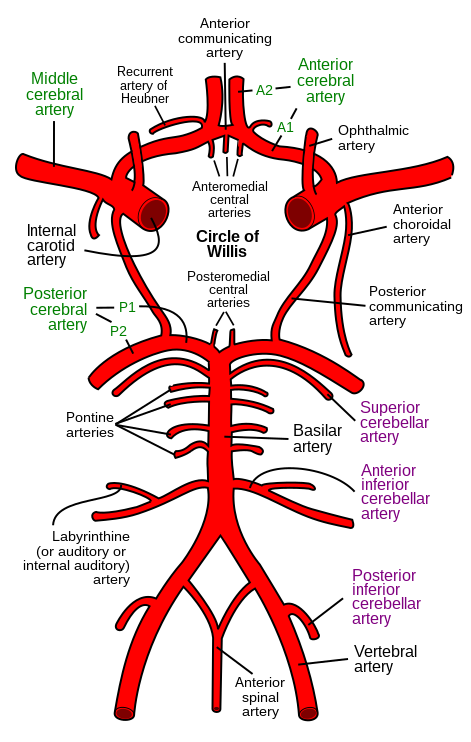
The Circle of Willis is a ring of anastamoses in the brain consisting of the anterior cerebral arteries, anterior communicating artery, internal carotid arteries, posterior cerebral arteries, posterior communicating arteries, but usually not (depending on the source) the basilar artery and middle cerebral arteries. It's all rather confusing because the loop of communicating arteries is fed by other arteries that you may or may not consider part of the circle itself.

Saturday, March 22, 2014

WILTIMS #124: T-3 years until Match Day

As you may have seen on the internet or news, today was Match Day for fourth year medical students around the country. The Match is the almost dystopian system used to pair graduating medical students with hospitals for residency programs. The whole process is completed by a computer algorithm that finds the best fit between the 35,000 applicants and 30,000 positions based off of ranked lists submitted by both students and hospitals. If you read those numbers correctly, you'll note that not everyone matches, though 94% of US allopathic seniors do (international and osteopathic schools generally don't fare as well).

A week before Match Day, emails go out to all applicants telling them whether they matched and, if they did, not saying where. Then on Match Day, all the matched seniors across the country meet at their schools and, at the stroke of noon eastern time, simultaneously open envelopes that tell them where they will spend the next 3-7 years of their lives.

Here are a couple videos showing the typical level of excitement:


My first-year class had lecture from 9-noon, so we got out of class right after the fourth-years had opened their letters. It was really exciting. Everyone was hugging and laughing and sharing tears of joy. They don't graduate or become doctors for another few months but Match Day is the real finale of medical school - the culmination of 3½ years of hard work (not to mention the years before that working to just get in!).

3 more years!

TIL: The first hospitals were developed as a place to treat travelers or pilgrims who couldn't be treated at home. Hospital, hostel, and hotel as share the same root.

Medical school admissions interviews and photos were first implemented at the University of Michigan to screen out Jewish and black applicants who were not otherwise identifiable by name.

Myelomeningocele, also known as spina bifida overta (or just spina bifida to the general public), causes hydrocephalus in 80% of babies. Spina bifida is a condition where a portion of the lower spinal cord doesn't form correctly and leaks cerebral spinal fluid (CSF) into the open air. This is incredibly dangerous because if, left untreated, the child will develop fatal meningitis within days. But once the hole is surgically sealed, the CSF starts building up in the brain because the normal draining routes never formed. Excess CSF fluid is called hydrocephalus and it requires the surgical implantation of a shunt that connects the CSF cisterns of the brain to the peritoneal cavity of the abdomen, where the fluid is easily absorbed.

Type I Chiari malformation is when the cerebellar tonsils block the foramen magnum (the hole in the skull through with the spinal cord passes), blocking CSF circulation and pinching the brain stem.

Dandy-Walker syndrome results from a malformation cerebellum and enlargement of the fourth ventricle.

Alobar holoprosencephaly is an often fatal deformation of the brain where the two hemispheres never develop.

Tuesday, March 18, 2014

WILTIMS #120: They did what now?

A page from "The Anatomical Basis of
Medical Practice" (red added by me)
One of the fun quirks of the neuro block is that we get frequent guest lectures by neurosurgeons. This is a rarefied group of lecturers than solicit the attention of medical students faster than a drill sergeant at basic training. They are psychotically confident, they always have the most ridiculous videos, and they only present the positive-outcome cases so they seem like heroes. That said, after watching them in the neurosurgery conferences a few times, I think being half an auditorium away is probably the best distance.

TIL: An anatomy book was released in 1971 that used Playboy-style pictures of women to show surface anatomy. It was so offensive that I honestly could have believed that our chancellor was just messing with us. The authors were doctors at Duke that wanted to make anatomy more approachable... and since most med students at the time were men they thought misogynistic writing and salacious pictures would be an improvement. Thankfully it did not get a second printing.

Saturday, January 11, 2014

WILTIMS #91: Eureka!

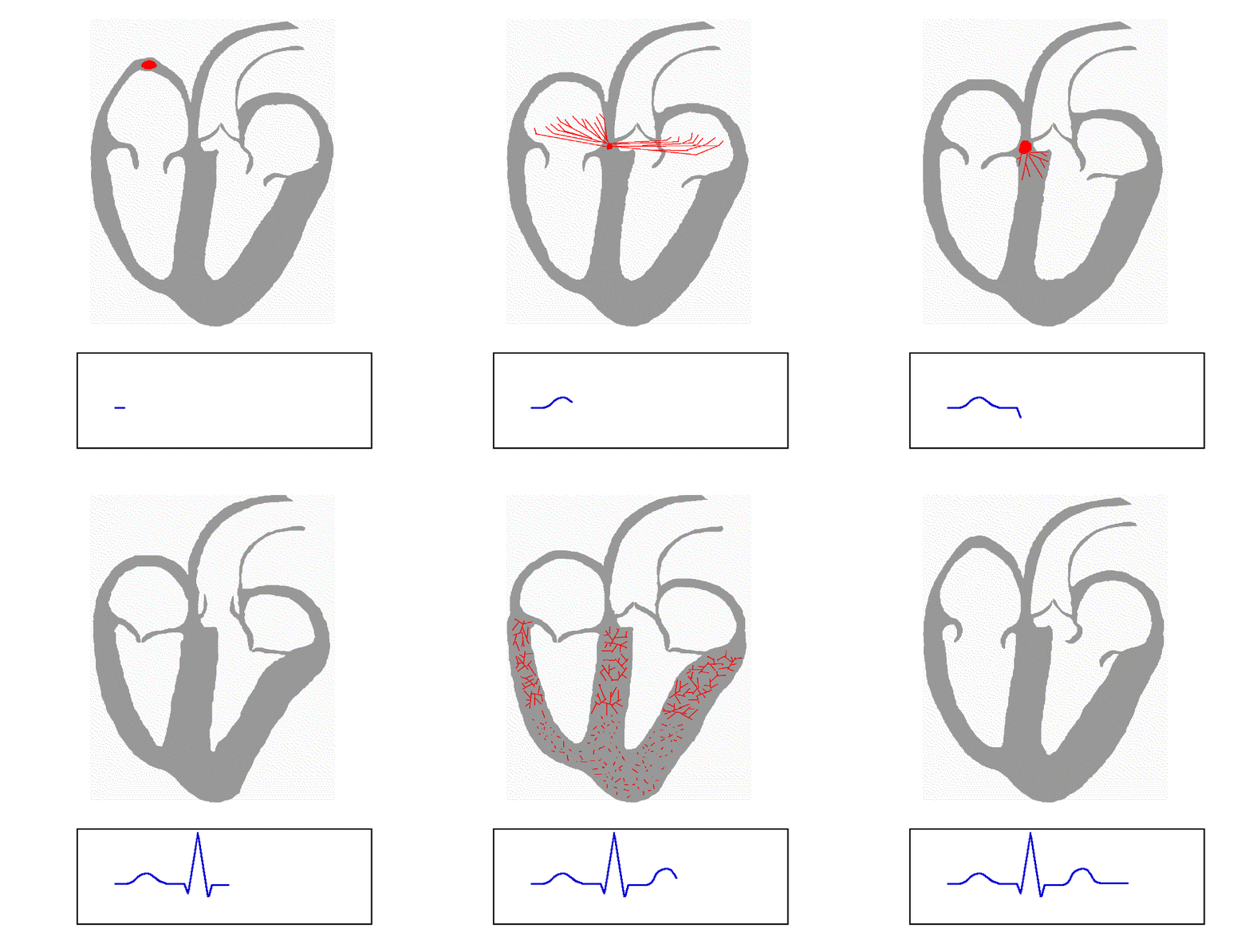
Sometimes I think my consciousness is only a tiny sub-process that my brain employes to keep me occupied while it's working. Case and point: Today, we learned how to read electrocardiograms (EKGs*), which I have been taught at least two other times in my academic career, each time grasping just enough information to survive a test but never really understanding.
Ok, I see how the different waves, segments and intervals line up with the heart's contraction cycle... But why are some waves up and others down? Why do you need a dozen leads when one would seem to do the job?
Today, it just clicked. Made perfect sense. Not sure what I was missing before. I feel like my subconscious was just working away on this one, setting up some EKG-understanding brain pathways while I wasn't paying attention, just in case I should ever come across EKGs again. Well, thank you brain! If you wouldn't mind, could you move on to neurology before the spring block? I know you've also seen those topics a few times before, and hey, it's practically an autobiography for you, so it should be pretty easy.

TIL: Cardiac output is limited by venous pressure. In other words, the heart can only pump so much blood at a time. The maximum amount of blood the heart can pump is determined by a number of factors, like the heart rate, preload, etc. but the limiting factor is the pressure in the veins. Each time the heart pumps, it pulls blood out of the venous system and the veins happily empty, but if the heart is moving too much blood too fast, the veins will collapse. A collapsed vein can't provide any more blood for the heart to pump, so the cardiac output plateaus.

If a spinal cord tumor is located in the lower back just below the tail of the main spinal cord, you don't want to make your incision below the lesion because the cerebral spinal fluid (CSF) will drain and move the tumor caudally (toward the butt) by the change in pressure.  If the tumor is connected to the spinal cord proper, it will dangerously stretch the spinal cord, possibly causing damage.

*The "K" in EKG comes from the original Greek wherein "cardio" is spelled "kardio." Some people use the abbreviation ECG to match the modern spelling, but those people are stupid.

Saturday, December 7, 2013

WILTIMS #79: Deep breath!

Today started out rather embarrassingly. I decided to attend the weekly neurosurgery conference up at the hospital. I had never been before, so I figured I'd play it safe and wear a shirt with a collar. I had to go to class right after, so I opted for my nicest pair of jeans. Turns out that dress shirts and ties are the norm. Oops! It didn't help that today was also apparently an interview day for prospective residents, meaning that half the room was wearing suits. Joy.

Anyways, after biting the bullet and finding a hiding spot in the corner, the presentation started. The five neurosurgical residents sat in the front row and alternately led the discussion of current interesting cases and were grilled by the attendings asking what they would have done in each case (and telling them why they were wrong). Both the cases and the gauntlet were terrifying and fascinating at the same time.

I think the most disconcerting part was watching the insensitive reactions of the residents to the grim prognoses of the patients. They've seen crazy cases like this every day for years and the only way to cope is apparently to laugh. I'll definitely be going back next week (with more appropriate attire), but I'll endeavor not to be desensitized too quickly.

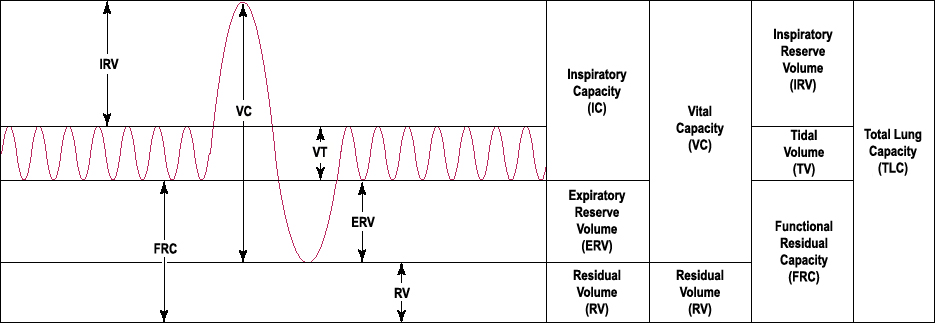
TIL: Dead space volume (VD) is the volume of air involved in respiration that is stuck in the trachea, bronchi and other rigid non-respiratory spaces. When you inhale, the fresh air in this space never makes it to the lungs; similarly, during exhalation some used air never makes it out of the body and gets sucked back in during the next inhalation. This is normally not an issue because the total volume inhaled is far more than the VD.

However, if you hyperventilate, taking lots of super-shallow breaths, you start increasing the proportion of each breath taken up by that used air, which eventually can lead to hypoxia and unconsciousness. Snorkels, when used improperly, can result in a similar effect. The tube of the snorkel effectively doubles your VD, meaning more stale air re-enters the lungs.

Diagram showing the various lung volumes -
Vis not shown because that volume never reaches the lungs. 
Obstructive sleep apnea is a condition that is caused by the collapse of the airway due to weak muscles that can't resist the negative pressure of inspiration during sleep. Essentially, instead of sucking in air, the lungs suck the walls of the pharynx closed, causing the patient to choke. This is treated by the administration of CPAP (or BiPAP) which involves the wearing of a mask while sleeping that helps push air into the lungs, preventing the collapse of the airway.

Friday, October 25, 2013

WILTIMS #57: Gone fishin'

Today was a long but good day filled with fun, mostly extracurricular goodies.

On the brief curricular side of things, we had yet another histology lab (only 2 more!). This time we were investigating the skin... and a monkey fingertip.

This afternoon I got to step back over to the patient side of medicine at my first appointment with my new oncologist. I was first seen by an oncology fellow* working under the main doctor. It was fun chatting with (and silently judging) someone who is, though already 10 years ahead of me, still completing his training. When my actual doctor came in, it was entertaining watching him simultaneously tend to me and teach his student.

After my appointment (everything looks good btw), I ran back to campus to play in our final flag football match of the season. We were crushed by a team of second-years, but they were such good sports that we still had a blast.

After the game, I quickly changed and headed back out to a neurosurgery interest group meeting. We met in the radiology conference room in the hospital and, unlike other interest group meetings I've attended, were greeted by not one, but easily half a dozen doctors, fellows and residents. The head of neurosurgery welcomed us and then a pediatric neurosurgeon presented on current interventional techniques for common maladies.

TIL: The skin contains three types of glands: two sweat glands and one that secretes an oily substance called sebum. This third secretion is released by a holocrine gland which emits its cargo by literally filling up until it bursts. Accordingly, your skin perspires sweat, oil and cellular debris.

A bone marrow biopsy is not indicated for a stage 2 Hodgkin's lymphoma patient (hopefully the fellow learned this too!).

When a cranial suture (the border between bones of dome of the head) fuses earlier than normal in a child, the head will elongate in the direction parallel to the suture. This is called craniosynostosis and doesn't usually cause and neurological deficits directly. But because children aren't generally as nice to a kid with a noticeably oblong head, if the defect was not corrected the child is almost certain to suffer socially and subsequently educationally.

Young children recover extremely well from cranial surgery thanks to their still-developing skeleton. A 6-month old could have the entire surface of the skull removed and grow it back within weeks.

Neurosurgery before good imaging techniques were invented used to be described thusly: For a hobby you can either do fishing, hunting or neurosurgery. Your prey never survives, but at least you can have some fun.

*For those unfamiliar with the ridiculously complicated nomenclature for students of medical education:

  • 1st-2nd year of medical school → medical student
  • 3rd-4th year of medical school → medical student/sub-intern
  • 1st year of residency → intern and/or doctor
  • 2nd-6th year of residency (usually 3-4 years) → resident and/or doctor
  • 1st-4th year of fellowship (usually 2-4 years)→ fellow and/or doctor