Today I spent far more time with my study group than in class and here is the result of 3½ hours of work:
Totally makes sense, right? Myeloid neoplasms still to come... TIL: "B symptoms" are a weird term for symptoms used in lymphoma staging. They include intermittent fever, night sweats, and unintentional weight loss. If those are the 'B symptoms', what are the 'A symptoms'? you might reasonably ask. There aren't any! Or, more precisely, "A" indicates the lack of symptoms. So a stage IIA lymphoma is less severe than a stage IIB which presents with some or all of the symptoms listed above.
Say you want to check if a CT scanner malfunctioned during a scan or you're treating a nuclear power facility worker who was briefly exposed to a radioactive source. How could you tell if damage was done when outwardly these patients look and feel totally fine? Well, it turns out that the most sensitive cells to a massive full-body radiation exposure are leukocytes (T cells, B cells and natural killer cells of the immune system). So by doing a complete blood count (CBC) you can quickly see if these canaries in the proverbial coal mine have keeled over, indicating more serious systemic cell death to come.
As we again have Thursday and Friday off this week thanks to obscure Jewish holidays, I thought I'd spread out my three blog posts a bit and publish this one today. I, in no way, just didn't write anything yesterday due to being lazy and/or enjoying date night with the SO. Nope. Wasn't that at all...
Anyways, though this week was fewer in days, it was all the denser in interesting experiences.
Go Little Giant Cells!
First up was the annual first-year vs second-year powderpuff flag-football game. We became the first class to go 2-0 in school history (after being the only class to upset the second-years, last year). It's a good thing we don't generally have competitive teams for med school students because if a "friendly" competition between classes at the same school is this contentious, I'm pretty sure interschool games would turn bloody.
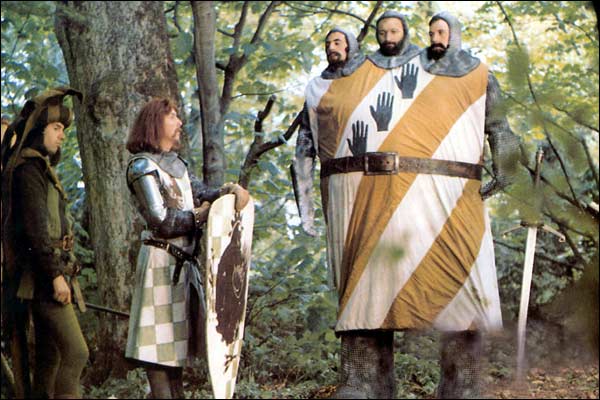
Earlier that day we had an unusual standardized patient (SP) interaction where rather than each of us dressing up in white coats and interviewing one of these actor-instructors individually, we met as a group and interviewed a SP en masse. They had each student ask one question and then the next person was supposed to proceed logically and continue the interview. That was weird. Props to the two SPs we had for staying in character despite the ludicrous situation of being interviewed simultaneously by 8 unqualified med students in neon pink football paraphernalia.
LEFT HEAD: In that case I shall have to kill you.
MIDDLE HEAD: Shall I?
RIGHT HEAD: Oh, I don't think so.
MIDDLE HEAD: Well, what do I think?
The takeaway lesson from this for me was that asking all the appropriate questions in succession will do you no good if you don't listen and adapt to the patient. That's the skill that's hard to learn. Anyone can read a checklist and write down answers, but learning how to disarm and effectively communicate with a stubborn or defensive patient takes people skills and practice. This is almost impossible to do as an eight-headed med student monster.
Yesterday we had our last required microbiology lab session (though there is an optional lab manual for "How to make pale ale" for when we start studying fungi). We did several stains on tiny bacteria and could only see a haze of red or speckles of blue, neither of which we were supposed to see. The picture below was the most interesting thing we observed all day. What an interesting bacterial growth pattern, you might think. Actually, that growth is the inorganic crystals of the very appropriately named crystal violet dye that we use to perform a Gram-stain. It's an artifact of poor staining technique and it was absolutely fascinating compared to the reddish wisps that were all over the rest of the slide.
The Artifact (nothing to see here)
Lastly, today I got to be a patient again but still learned a thing or two. It was interesting going back to my oncologist for my 4 month check-up, now that we are learning about lymphomas in pathology. Since it's common knowledge amongst my classmates that I had Hodgkin's lymphoma a few years ago, I've had quite a few friends ask excitedly which subclass of the disease I had. Somewhat embarrassingly, I had no idea, so I was looking forward to my appointment today to ask my doc for the details on my long past diagnosis. Then I got a kind reminder that the stuff that we work so hard to learn these first two years is sometimes absolutely useless when it comes to the real world treatment of patients.
TIL YIL: Turns out that with one rare exception, the subtypes of Hodgkin's lymphoma are clinically irrelevant because the treatment, ("ABVD" chemo +/- radiation) is exactly the same regardless of cellular pathology. That doesn't mean I won't be memorizing those subtypes for my exams!
Today was a long but good day filled with fun, mostly extracurricular goodies.
On the brief curricular side of things, we had yet another histology lab (only 2 more!). This time we were investigating the skin... and a monkey fingertip.
This afternoon I got to step back over to the patient side of medicine at my first appointment with my new oncologist. I was first seen by an oncology fellow* working under the main doctor. It was fun chatting with (and silently judging) someone who is, though already 10 years ahead of me, still completing his training. When my actual doctor came in, it was entertaining watching him simultaneously tend to me and teach his student.
After my appointment (everything looks good btw), I ran back to campus to play in our final flag football match of the season. We were crushed by a team of second-years, but they were such good sports that we still had a blast.
After the game, I quickly changed and headed back out to a neurosurgery interest group meeting. We met in the radiology conference room in the hospital and, unlike other interest group meetings I've attended, were greeted by not one, but easily half a dozen doctors, fellows and residents. The head of neurosurgery welcomed us and then a pediatric neurosurgeon presented on current interventional techniques for common maladies.
TIL: The skin contains three types of glands: two sweat glands and one that secretes an oily substance called sebum. This third secretion is released by a holocrine gland which emits its cargo by literally filling up until it bursts. Accordingly, your skin perspires sweat, oil and cellular debris.
A bone marrow biopsy is not indicated for a stage 2 Hodgkin's lymphoma patient (hopefully the fellow learned this too!).
When a cranial suture (the border between bones of dome of the head) fuses earlier than normal in a child, the head will elongate in the direction parallel to the suture. This is called craniosynostosis and doesn't usually cause and neurological deficits directly. But because children aren't generally as nice to a kid with a noticeably oblong head, if the defect was not corrected the child is almost certain to suffer socially and subsequently educationally.
Young children recover extremely well from cranial surgery thanks to their still-developing skeleton. A 6-month old could have the entire surface of the skull removed and grow it back within weeks.
Neurosurgery before good imaging techniques were invented used to be described thusly: For a hobby you can either do fishing, hunting or neurosurgery. Your prey never survives, but at least you can have some fun.
*For those unfamiliar with the ridiculously complicated nomenclature for students of medical education:
1st-2nd year of medical school → medical student
3rd-4th year of medical school → medical student/sub-intern
1st year of residency → intern and/or doctor
2nd-6th year of residency (usually 3-4 years) → resident and/or doctor
1st-4th year of fellowship (usually 2-4 years)→ fellow and/or doctor
The past two days were a whirlwind of activity, broken up by very little sleep. Yesterday began with histology lab and three histology lectures. Histo continues to cement itself in my mind as a nice time to take a nap and/or catch up on my social media - I'm looking at you Reddit (no, literally, I have Reddit open in my other tab).
Luckily, our anatomy lecture that afternoon was given by an incredibly entertaining radiologist that bribed us with candy (that never stops working, apparently). The talk was on the basics of reading x-rays and CTs, specifically in the thorax, as that's all the anatomy we are expected to know so far. One of our first exercises was to try to identify a structure from the three cross-sectional images below.
We tried to apply the skills we had just learned to make educated guesses. Looks like a tube. White is dense material; black is air. Deformed bone? Nope. Calcified vessel of some sort? Wouldn't be that thick... Messed-up kidney? Is "messed-up" a medical term?
I'll let you think about it. Clue: you all know this structure. Click here to see the answer.
We also discussed the common pathological findings of the anterior mediastinum, which are remembered by the dumbest mnemonic ever: the 4 Ts. These are thymoma, teratoma, thyroid, and terrible lymphoma. Does that last one seem like a bit of a stretch to you, too? Here the professor asked our class of ~200 to raise their hands if they knew someone who had had the most common lymphoma: Hodgkin's. (I raised my hand along with probably a quarter of the class). She then asked us to keep our hands up if they were immediate family. At this point I gesture to her that I had in fact had it myself. You could tell she was stoked that I was there to make her point.
Dr. R: What's your name?
Me: Christopher
Dr. R: I don't want to violate HIPAA [class chuckles], so how about you share with the class.
[passes me the mic]
Me: Actually, I had Hodgkin's lymphoma.
Dr. R: And how are you doing?
Me: Pretty good.
Dr. R (to class): He looks pretty good to me.
Dr. R (to me): Would you call lymphoma "terrible?" [I tentatively shake my head] I mean I'm sure it wasn't fun and you probably called it many nasty things, but you survived, yes? [I nod]
Dr. R (to class): You see? Lymphoma, as far as cancers go, is very treatable and almost never terrible. This is why I hate that mnemonic.
Dr. R (to me): Here, take some candy and pass it down your row.
So cancer perk #56: Get's you candy for sharing in class!
After this we had smaller group sessions to go over the radiology. Our group was taught by the chief radiology resident from Westchester Medical Center, who was very nice and down to earth.
Then it was off to the grass in front of the pediatric trauma helipad for the first flag-football games of the season! The medical, public health, and physical therapy students field over a dozen teams each year for a weekly co-rec flag-football league.
I helped ref the first game with one of my roommates (please always be nice to volunteer refs in any sport) then took the field with people who I had mostly just met to battle it out. After a promising 12-12 halftime score, the other team got on a streak and eventually won 42-12. The game was not as lopsided as it would appear though, because any goal scored by a girl is double points and their girls were quite good. Lots of fun and a good study break.
My roommates and I made it back to the apartment at around 8. It was here that my day took a turn for the worse and I only have myself to blame. I (being stupid) decided to sign up as a scribe for the school's student run lecture transcription service. We type out notes from recorded audio tracks and are paid for our time. The only problem with this plan is that I can't type quickly - at all. It took me 6 hours to type and format a 35 minute lecture. Never again.
Today, we had another clinical skills session where we learned more of how to do a physical exam. To be clear, all we're really learning at the moment is how to look like we know how to do a physical exam. For instance, today we learned how to palpate (touch), percuss (tap), and auscultate (listen to) the neck, chest and back. Theoretically, this would enable us to examine the lungs and heart, but as we have no idea what normal or abnormal sounds like yet, we're really just playing doctor - albeit very accurately. A common, if disconcerting, motto for clinical learning is "Fake it 'til you make it."
In the afternoon, we had our last anatomy lab before our first test on Monday (both a written and practical). It turns out that our cadaver continues to be the best body in the room. Our person's heart had an interesting and surprisingly common birth defect, a patent foramen ovale. This is when there is a hole between the right and left atria of the heart. During fetal development, this shunt allows the oxygenated blood from the umbilical cord to skip the developing lungs and perfuse the rest of the growing body. Usually the shunt closes after birth, but in 30% of people a small hole persists into adulthood. As long as it's small enough not to dramatically affect the heart's circulation, the person would likely never even know until someone listens with a stethoscope (like we did this morning!) and hears the associated murmur (unlike we did this morning...).
TIL: A flail chest is when 3 or more ribs on one side of the chest are each broken in two or more places. This causes a portion of the chest to move in paradoxical motion. (Warning: The video is... unsettling)