Showing posts with label immunology. Show all posts

Wednesday, September 3, 2014

WILTIMS #176: Vaccines PLUS

Today we started off with a series of lectures on congenital and genetic diseases which, though informative, were not super big on interesting anecdotes. The last lecture was on vaccines and it was actually pretty cool to approach this topic now that I know a little more about the immune system. If you want my views on vaccine safety etc, please see my previous post on the subject, or any of the countless reputable online resources on the subject or [in pharma advertisement voice] talk to your doctor.

Cowpox on the hand of the milkmaid, Sarah Nelmes
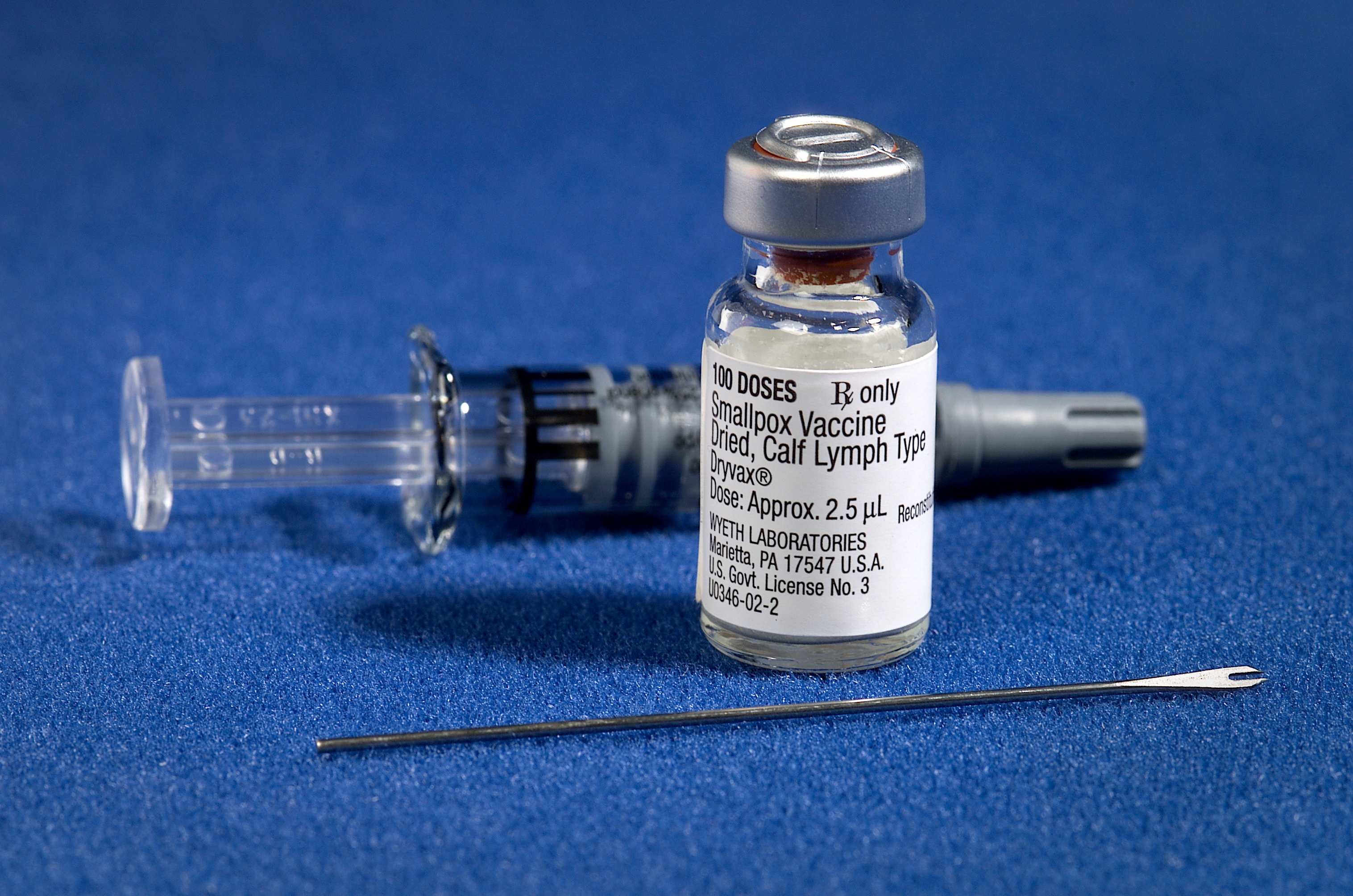
First a little set-up from things we learned last year: The most famous example of vaccine development is that of the smallpox vaccine in 1796 by Edward Jenner, with the help of an unconsenting minor, a milkmaid, and Blossom the cow. Jenner (and several other people at the time) noticed that milkmaids that had been exposed to cowpox (similar to smallpox but much less virulent in humans) had little to no reaction to exposure to smallpox. Being the good, if less-than-ethical scientist, Jenner needed to test that this exposure was key to their immunity, so he did the obvious thing and tested it on his gardener's 8 year old boy. After inoculating him with cowpox pus from a milkmaid (who was infected by Blossom), the boy was exposed to smallpox and thankfully never developed the disease.

TIL: The idea behind the cowpox-smallpox vaccine is that, since cowpox is similar to smallpox, but not very good at attacking humans, the immune system will easily combat the disease and store up weapons in the adaptive immune system that can attack either virus equally well in the future.
Attenuated vaccines use the same approach. Scientists take a nasty human pathogen and grow it in cells from another species, like monkeys. The virus/bacterium mutates over many generations until it is better at infecting monkey cells. Hopefully, these changes came at the price of the bug losing its virulence towards humans. This is the equivalent to turning smallpox into cowpox to give the immune system an easy practice target. Attenuated vaccines are generally not used with immunocompromised patients because in very rare cases, the patient can develop the full blown disease if a few of the mutated viruses/bacteria mutate back. This is not a problem with immunologically healthy people.

Adjuvants are another group of compounds about which you may have heard when talking about vaccines. These are substances are added to vaccines to get the immune system to treat your fake threat seriously. Since non-attenuated vaccines are usually composed of just a small piece of a surface protein of the targeted virus/bacterium, the immune system will recognize it as foreign and log it as a possible danger. But the immune system is also smart enough to look around and see that none of the other markers of an infection are present, so it will hold back its biggest weapons for more seemingly serious threats. So scientists add compounds that mimic (or are straight-up copies of) parts of other real threats to trigger a proper immune response that will give the vaccine material the welcome it deserves. These adjuvants often include an aluminum salt or some lipid-like organic molecule.

Friday, August 29, 2014

WILTIMS #175: "And the type of disease shall be one..." "Two, Sir!"

Another week down! Boy am I looking forward to catching up on some much needed sleep on this long weekend. It will help that we had another flag football game this afternoon, to ensure I sleep soundly tonight. I still love how into our intramural flag football league my school gets. Nothing releases all the frustration of lectures and studying like some good ol' semi-violent sport. 

TIL: There is no type I autoimmune diseases, only II, III and IV. Autoimmune diseases can be classified according to the corresponding type of hypersensitivity. Type I hypersensitivity is the kind experienced in allergic reactions and no autoimmune disease mimics that mechanism, hence no Type I disease category.

Autoimmune polyendocrinopathy-candidiasis-ectodermal dystrophy (APECED) is a ridiculously long-winded disease name. Broken down it means a disease caused by the body's own immune system (autoimmune) attacking multiple glands (polyendocrinopathy) which can lead to an infection by candida yeasts (candidiasis) and the wasting (dystrophy) of tissues derived from the outermost germ cell layer (ectodermal). Simple!

WILTIMS #174: ALL the factoids!

TIL: Allergic reactions happen in two discrete phases, one lasting minutes before quickly resolving and a second, delayed response that only begins hours after exposure to the allergen and lasts for additional hours.

Staying on the allergy theme: anyone who knows someone with a severe allergy has heard of an EpiPen, but do you know how they work? The active ingredient in an EpiPen is the eponymous epinephrine, also known as adrenaline*. Epinephrine activates a potent sympathetic response that does two main things to combat allergic anaphylaxis: -1- it restores blood pressure by decreasing vasodilation (widening of blood vessels) and vessel permeability, and -2- it relaxes the smooth muscle of the bronchioles (large airways of the lungs), thus alleviating bronchospasm (airway constriction), wheezing and dyspnea (shortness of breath).

Graft-vs-host disease is the lesser known type of organ transplant rejection where, instead of the host body attacking the foreign organ, the donated tissue, typically bone marrow, attacks the recipient.

Now for the rapid-fire round!

Earlier this week I learned: Trypanosoma brucei is a parasite usually transmitted by the bite of the tsetse fly and causes African trypanosomiasis, also called cyclic sleeping sickness. The infection can cause many symptoms, the most identifiable of which is the disruption of the sleep cycle, resulting in disjointed sleep at night and sudden sleep episodes during the day.

Herpes simplex virus, both HSV-1 which causes cold sores and HSV-2 that causes genital herpes, hides in nerve cell bodies, allowing it to hide from the immune system between flare-ups.

The rise in Cesarean section as opposed to vaginal birth has diminished the exposure of infants to commensal flora. This can allow more dangerous bugs to gain a foothold in environments from which they'd normally be outcompeted.

A liver can grow back from just a few cells so long as the liver's reticular scaffolding remains.

A beer belly results from liver damage resulting in hypoalbuminemia leading to edema.

Alpha-1 antitrypsin deficiency causes seemingly disparate effects in the liver and the lung by affecting the production of a small protein made in the liver and used in the lung, among other places. The protein's accumulation in the liver can cause liver failure, and its absence in the lung robs the respiratory epithelium of elasticity.

*Unlike most drugs that have two names, one proprietary and one generic, epinephrine and adrenaline are actually both generic. An ill-conceived patent attempt on the name "Adrenalin" led the US to adopt epinephrine as the official term for the compound, while British Commonwealth nations use adrenaline.

Tuesday, August 26, 2014

WILTIMS #172: A swell day

I learned a whole bunch of interesting things today, but am absolutely exhausted, so here's one to tide you over and hopefully I can make up for it tomorrow.

TIL: Swelling is always found near stressed tissues for a couple reasons: First, if there is physical damage to cells (like after a cut or splinter), the cellular contents spill into the extracellular space and trigger the innate immune system which makes the nearby blood vessels leaky so that white blood cells can get access to the area. The additional fluid flood the area, resulting in swelling of the tissue.

A second mechanism causes swelling of the cells themselves and is due to one of the first outwardly noticeable effects of cellular stress. Biochemical respiration is disrupted, leading to less energy in the form of ATP. The sodium-potassium pump (NaK pump) is one of the most energy-hungry enzymes in the cell and stops to function quickly without full ATP production. Without the pumps, the electrochemical balance of the cell gets wonky and salt builds up in the cells, pulling fluid across the cell membrane, causing the cells to swell.


Monday, August 25, 2014

WILTIMS #171: Trouble in immunologic Eden

TIL: The "original antigenic sin" is a phrase describing a fundamental flaw in the immune system's ability to adapt over time. When the immune system is first exposed to an antigen (bad thingy), it tailors the best possible adaptive response to that threat. The problem is that the threat (be it a bacterium, virus, etc) mutates significantly by the time the person is re-exposed to the same antigen. The immune response, though, doesn't change. It's like you finally learn that Achilles' weakness is his heel and you proceed to keep attacking the heel of every descendant of Achilles that you fight. 

We learned last year that the point of maximal impulse (PMI) is a physical exam finding of the location where you can best feel the beating of the heart through the chest wall. This location is usually at the counterintuitively named apex of the heart along the midclavicular line in the 5th intercostal space. Today we finally learned that the reason we care about this heart measurement is because different pathological processes affect this location differently. Whereas ventricular hypertrophy only changes the magnitude of the PMI, hypervolemic distention of the ventricles will also displace the PMI to the left.

Wednesday, August 20, 2014

WILTIMS #168: Did you mean energy?

TIL: Anergy is a word. I swear I stared at that slide for five minutes trying to figure out if it was a super prominent typo or a word I had never seen. Turns out its the latter. Anergy is essentially the opposite of an allergy. Where an allergy is an overreaction by the immune system, anergy is the lack of an immune response. Anergy can be helpful in telling the body not to attack itself, but can also lead to an immunodeficient state if it is trained not to attack actual pathogens.

Secondly, Listeria is one frightenly persistent bug. Generally, when the body finds a bacterium swimming around in its fluids, it sends macrophages to go phagocytize (eat) and digest it. It then uses the fragments to train the adaptive immune system to hunt down and find any more of those bacteria that might be around. But Listeria has found an escape route. If a bacterium can escape the vesicles that the macrophages use to trap and digest them, they can live in the cytoplasm. Listeria can secrete an enzyme called hemolysin and dissolve the walls of its prison cell.

The body will (usually) still be able to overcome this tactic by recruiting other macrophages and immune cells to kill the infected macrophage, releasing the bacteria back into the body fluid to be again attacked and engulfed, hopefully with better results.

Lastly, the drug atropine is derived from the belladonna plant. Belladonna literally means "fair lady" and was named so because it (among other things) would dilate the eyes, which was a desirable trait in 18th century Italy.

Thursday, August 14, 2014

WILTIMS #164: My thumb hurts

The ever exciting med school flag football season has started up at my school, and after some crazy team-trading drama, we had our first game today. Predictably, I quickly hurt myself by jamming my thumb into someone's hip while reaching for a flag. Jamming is a technical term...

Later in the game as our artificially high score passed 100, I turned to a teammate and, while still rubbing my sore thumb, exclaimed, "Wow, I think we just broke three digits!"

I immediately knew I should have phrased that differently when he looked with a shocked expression down at my hand. Only at a med school flag football game, would he think I was casually commenting on breaking three fingers.

TIL: Red blood cells actually participate in the body's immune response via the complement system. Though they have no nucleus and are generally pretty useless, red blood cells express complement receptors which can bind to antigen fragments and bring them to the liver or spleen, where they are taken up by macrophages for incorporation into the adaptive immune response.

Of course, red blood cells also cause the immune system some problems too; they do not have the ability that most other cells do that tells the immune system they are infected. It's like a bank without a silent alarm and malaria is the crook that has cased the joint. Once inside, malaria is invisible to the immune police. The silent alarm in this case is major histocompatibility complex (MHC) class II, which displays pieces of an infectious agent, alerting the immune system to the infection (and begging for a mercy killing).

Also, it is loosely estimated that there is a 1% decrease in renal function per year after the age of 25. Woohoo, still 98% functioning!