Showing posts with label etymology. Show all posts

Tuesday, March 31, 2015

WILTIMS #277-81: GI blast from the past

Ugh. One more round of exams to go! As punishment for my continued tardiness, the following entries are from last week, before yesterday's GI/pancreas/liver test. Nothing like studying things after the exam!

MondayIL: Shifting dullness is a term for, essentially, how the bubbles in your intestines float around when your abdomen is filled with fluid, called ascites. If a patient with ascites is lying on their back, the intestines float to the top of the stomach and you will hear dullness on either flank from all the fluid. If the patient turns onto their side, the intestines float up to the other flank and now the center of the abdomen will sound dull. Hence, shifting dullness!

Similarly, balloting the liver is a procedure to feel the liver in a patient whose abdomen is so filled with fluid that you can't find the non-floating organs amide the deluge. It involves creating a fluid pressure wave by rapping on the stomach that pushes the liver back and, as the liver rebounds, you press again to feel the liver directly. You have to time it just right so that as the liver sloshes back on forth, you feel it on one of the "forths."
Muehrcke's lines

Muehrcke's lines are white lines on fingernails that are indicative of hypoalbuminemia (low albumin levels).


Lastly, in Medical Ethics, we read about the crazy choices made and actions done at Memorial Hospital in New Orleans after Hurricane Katrina. via this Pulitzer Prize winning, if somewhat one-sided, New York Times magazine article. When you have a long while to kill, it's worth a read.

TuesdayIL: The Active Compression Test of O'Brien is a physical exam maneuver used to diagnose a SLAP lesion of the shoulder. Today we had physical therapy students from another college at our school come and teach us some musculoskeletal exam maneuvers. Though I think it was great to have some cross-disciplinary education going on, it would have been nice to do this either 16 months ago, when we learned about the extremities in anatomy, or three weeks from now, when we go over musculoskeletal pathology. At the moment, remembering all the anatomical terminology involved in things such as O'Brien's test is like trying to remember words from high school French.

WednesdayIL: 15 minutes is really not enough time to do even a focused history and physical on a patient. I'm amazed that that's the length of a typical office encounter nowadays. Today was my final practical exam of sorts for FCM, our how-to-be-a-doctor class. We had to do four back-to-back 15 minute encounters with standardized patients experiencing a variety of fake medical problems. This is supposed to be in preparation for the 12 similar encounters we do as part of our Step 2 board exams at the the end of next year. Though you can find out an awful lot in 15 minutes, to cut out so much of the comprehensive exam seems to go against everything we've learned over the past two years about properly screening for other problems during a visit. Hopefully as we get better and more efficient, we'll just learn to do more in less time.

ThursdayIL: The word jaundice comes from the French word "jaune" for yellow. Been a long time since I've done my French colors... should have known that one.

Friday, October 31, 2014

WILTYIMS #205: Thank you, sir, may I have another?!

Yesterday was another marathon exam session (hence my silence earlier in the week (actually, my posts are almost always silent (wait! I found an exception!))). We had exams from 9 to 5 with an hour lunch spent cramming for the tests we hadn't yet taken. Livin' life to the fullest right here.

Anyways we did, in fact, have class today because reasonable recovery time is for losers, apparently. We started our final chunk of microbiology with lectures on fungi today to be followed by an introduction to viruses tomorrow (or mycology and virology, respectively). To be honest, I don't think my brain had fully reset yet before lecture today and I retained absolutely nothing from sitting in class. But for the sake of you, my determined reader, I dug back through the lecture slides* and found a thing:

TIL: Ringworm is a complete misnomer. Unlike roundworms, pinworms, and hookworms, which are all horribly gross macroscopic worms that can live, grow and breed inside people, ringworms are not actually worms. Ringworm is the colloquial term for a large group of cutaneous (skin) infections caused by fungi. Amusingly though, the colloquial term has its origin in the actual medical name for the disease.

The different types of ringworm are classified by the Latin word tinea, followed by the Latin term for the body part they infect. So athlete's foot, which is a type of ringworm is called tinea pedis, which literally means "foot worm" even though there is no worm involved.

* Dug all the way to slide number 3
 Seriously, wear shoes or larvae will puncture your bare feet, swim to your lungs, crawl out of your trachea, to be swallowed into your intestines and grow into worms that feed and grow while releasing eggs in your poo. Yay parasites!

Tuesday, September 30, 2014

WILTIMS #190: Raise shields!

Today was a very lab/practical heavy day, so I didn't learn much in the way of interesting factoids, but rather reinforced things from previous days. But in preparation/procrastination for tomorrow, I did learn something:

TIL: One of the ways of describing the bacterial colony feature of elevation, or the raised/flattened appearance of the colony, is the term umbonate. Umbonate comes from the latin root umbo which describes a "boss," or raised bump on a shield. This is the same ultimate root as the modern word emboss, which took a detour through French before becoming part of the English lexicon.

A boss on a shield

Wednesday, August 20, 2014

WILTIMS #168: Did you mean energy?

TIL: Anergy is a word. I swear I stared at that slide for five minutes trying to figure out if it was a super prominent typo or a word I had never seen. Turns out its the latter. Anergy is essentially the opposite of an allergy. Where an allergy is an overreaction by the immune system, anergy is the lack of an immune response. Anergy can be helpful in telling the body not to attack itself, but can also lead to an immunodeficient state if it is trained not to attack actual pathogens.

Secondly, Listeria is one frightenly persistent bug. Generally, when the body finds a bacterium swimming around in its fluids, it sends macrophages to go phagocytize (eat) and digest it. It then uses the fragments to train the adaptive immune system to hunt down and find any more of those bacteria that might be around. But Listeria has found an escape route. If a bacterium can escape the vesicles that the macrophages use to trap and digest them, they can live in the cytoplasm. Listeria can secrete an enzyme called hemolysin and dissolve the walls of its prison cell.

The body will (usually) still be able to overcome this tactic by recruiting other macrophages and immune cells to kill the infected macrophage, releasing the bacteria back into the body fluid to be again attacked and engulfed, hopefully with better results.

Lastly, the drug atropine is derived from the belladonna plant. Belladonna literally means "fair lady" and was named so because it (among other things) would dilate the eyes, which was a desirable trait in 18th century Italy.

Tuesday, August 19, 2014

WILTIMS #166: Highlighter Syndrome

This is turning into a pet peeve of mine: our pharmacology course director has a habit of sequentially highlighting every. Single . WORD. Sure, he never forgets to mention anything, but I'm so distracted by the lack of logic in his color choices that I stop paying attention.


Moving on.

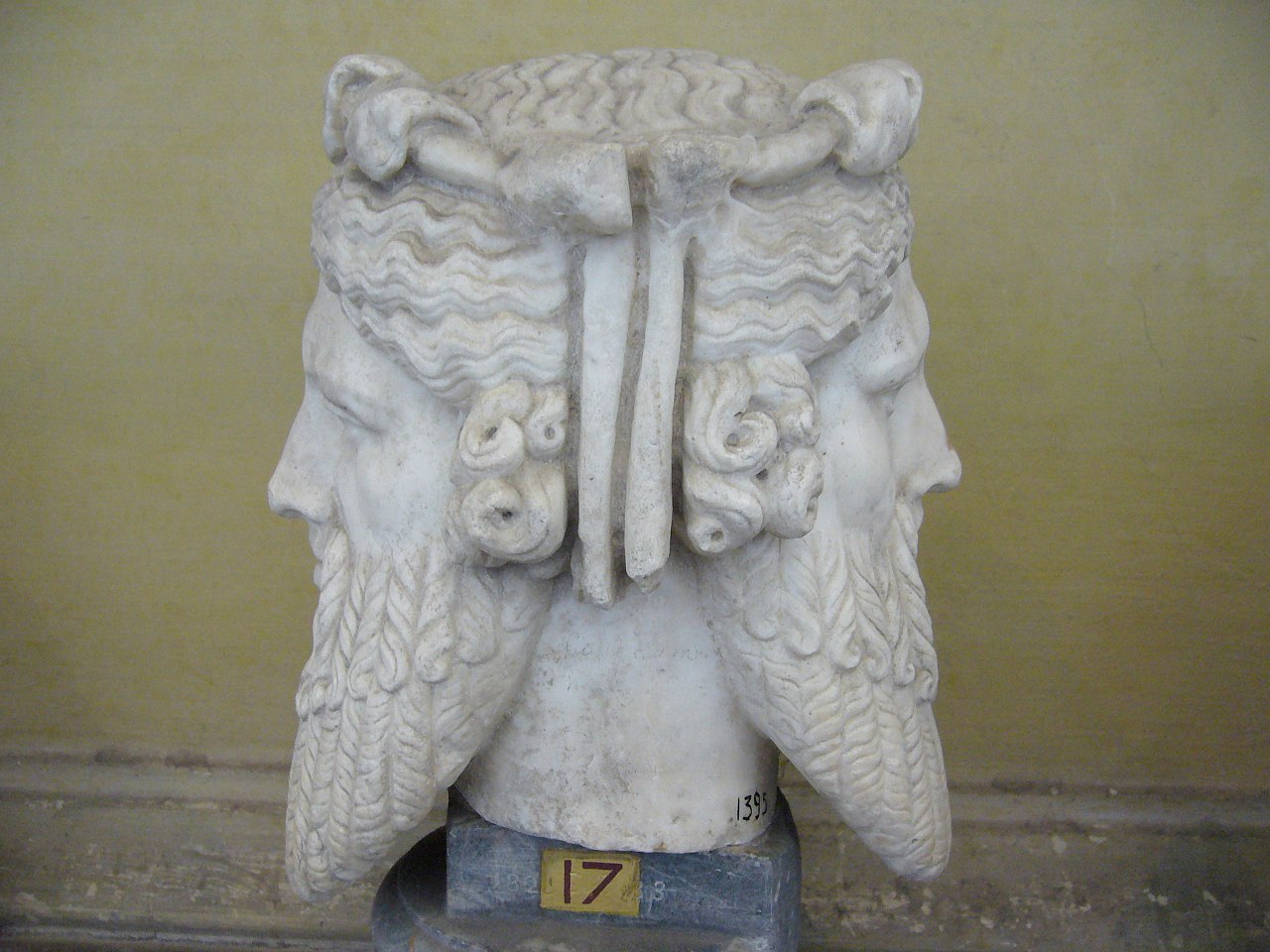
At some point in one of our pharm lectures today, the Janus kinase (or JAK) was used as an example. Intrigued by the apparent devine reference I Googled the enzyme to learn it's etymology. TIL, JAK was always this enzyme's acronym, but the very apt Janus moniker was an afterthought. Initially the members of this enzyme class were known as Just Another Kinase I and II or JAK I/II. Classic biologist naming eccentricities, but atypically, they quite elegantly renamed these kinases to after the two-faced Roman god.

Janus is one of the few unique gods of the generally Greek-derived Roman pantheon. He is the god of transitions and is often used to symbolize dichotomies due to his two-faced appearance. The Janus kinase takes this name because it contains two kinase domains: one readily phosphorylates substrates while the other turns off the first.

Next, it can be useful to have a really bad, poorly-binding agonist (enzyme promoter) to be used as a long term antagonist (enzyme demoter) because you avoid upregulation (creating more enzymes). Let's break this down a bit: If you want a drug that turns off a particular enzyme, you might try... well... turning off the enzyme. The problem is the body is too smart for that and will respond by producing more and more enzymes. Eventually you can't overcome the upregulation.

So instead, you can use a chemical that actually promotes the enzyme, but way less effectively than the body's natural promoters. This, in effect, slows down the enzyme. And if the chemical binds weakly enough, it won't actually trigger the production of more enzymes.

Lastly, there is hope of creating a cancer vaccine by selectively turning off part of the safety mechanism that the body uses to make sure that the T cells of the immune system don't target the body's own cells.

Thursday, February 20, 2014

WILTIMS #109: T4: Judgement Day

Medical euphemisms are interesting. Today we were discussing hypothyroidism, which when left untreated causes physical and mental symptoms that were once referred to as cretinism. This is where we get the word cretin. Well, that's actually tricky because the term vastly predates our understanding of the illness, so in a way the disease was named for the people described by the word. Like spastic, crippled, moron, and many other terms, cretinism was once perfectly acceptable but has become politically incorrect.

The word retarded is particularly interesting because it has a very literal meaning that is still used extensively in medicine, among other places. Retard simply means to slow, e.g. fire retardant slows the spread of a fire. So to say that a child is mentally retarded literally means that their mental faculties are developing slowly. This has become taboo to say outside of a strict medical setting, so we've had to come up with new euphemisms like developmentally delayed. It still means the same thing but hasn't been used as a derogatory slur... yet.

TIL: Competency is a legal distinction determined by a court. Capacity is a medical distinction determined by medical professionals. The latter can be used as evidence of the former. In every other way these two words are synonymous in regards to medical ethics.

T4 - Note the 4 iodine atoms
Thyroid hormone comes in two active flavors, T3 and T4, which differ only by the number of iodine atoms bound to the molecule. T3 is the more active of the two but T4 is both more prominent in the circulating blood and the preferred hormone given orally for thyroid replacement therapy. This is the case because T4 has a half-life of about a week, compared to T3's paltry 1 day. This increased retention allows thyroid hormone levels to remain more constant.

This related tidbit was something I learned while volunteering at a cancer screening clinic last year. The iodine used in the synthesis of thyroid hormone is actually the reason we make and consume iodized salt. The thyroid is the only organ that uses this trace but essential nutrient. This provides a surprisingly easy target for treating thyroid cancers. By injecting radioactive iodine, you can use the body's own natural pathways to target the radiation directly to the thyroid.


Saturday, February 8, 2014

WILTIMS #103: Stars, wings and licorice

TIL: The prefix "sidero-" is confusing. In Latin it relates to the stars, as in sidereal time (telling time by the stars). But in Ancient Greek it means iron, as in sideromancy (divination by watching the burning of straw dropped on red-hot iron). In biochemistry, sidero- is also used in words describing iron containing molecules such as the precursors to heme, the iron containing part of hemoglobin.

Sticking with the etymological theme, pteroylpentaglutamate contains the prefix ptero- for wing, as in pterodactyl. This is because pteridine, the molecular building block of pteroylpentaglutamate, is also the precursor to the dyes responsible for the striking color of butterfly wings.

Consumption of large amounts of licorice (the plant or black-colored candy, not Red Vines) inhibits 11-beta HSD2, an enzyme in the kidneys that converts cortisol to cortisone. This causes a buildup of cortisol which in high concentrations can stimulate the kidneys' response to aldosterone by mineralocorticoid receptors. This causes the kidneys to increase sodium and water retention and secrete excessive amounts of potassium, resulting in hypertension and hypokalemia, respectively.

Dandy–Walker syndrome is a congenital brain malformation involving the area of the brain around and within the cerebellum. It is named for Walter Dandy and Arthur Earl Walker, two consecutive chiefs of neurosurgery at Johns Hopkins.