Showing posts with label cranial nerves. Show all posts

Friday, November 13, 2020

TILIF #18: Uncontrolled

When I had cancer, I shaved my head. Hair was slowly falling out and it would have taken care of itself, but I bought into an idea that I learned from the lovely people at the local cancer center. That disease takes away many things - energy, appetite, future plans - but they all really boil down to a loss of control. You can't control when you go places, what you can eat, activities you're able to participate in, or whether the treatments will work. Taking back that little bit of control from the disease, even for something as superficial as choosing when my hair would go, felt freeing.

The other night, I was taking care of a very sick patient*. Even for the ICU, he was very, very sick and has been for quite some time. Pick an organ and chances are it's failing. There are all manner of tubes and wires coming from every part of his body. Part of what makes this so hard is that he was a totally normal child until a couple years ago, so "back to normal" is the unstated and possibly unreachable goal.

His family has done everything they could, even donating bone marrow for us to transplant. But everytime it feels like we're about to make progress, there's another setback, rare side effect or complication. This night, there were several things that went wrong; each could have been life threatening, but we were able to at least start addressing each of them by early morning.

Normally, this patient's mom is at the bedside, but when she needs to leave the hospital, grandma takes over. Grandma is fierce. She is a wonderful advocate for her grandchild, and doesn't stop pushing the team until she's satisfied. The issue that was most bothering the patient, and thus grandma, was his being itchy. Compared to failing lungs, kidneys, liver, immune system, etc., itchiness was admittedly not my highest priority, but it was grandma's. She was fixated on it, and after a while it admittedly became frustrating for everyone. This kid was old enough to understand that we needed him to stop itching, but he just wouldn't - to the point where he was bleeding. This only further upset grandma. Why couldn't we get something a simple as itching under control.

Grandma took a break and went to get food at around 3am. When she returned about an hour later, I sat down with her in the corner of the room and did my best to explain all the complicated interventions we were doing to stabilize the patient, also what we were trying to do about the itching. She listened politely and I braced for another lament about the persistent itchiness when she quietly asked, "Is he going to make it through this?"

I was blindsided. 21 hours into my shift, I stumbled through a non-committal answer to the effect of: "We're doing everything we can and we're going to take it one step at a time." We talked for a bit, but it was then that I realized that the itching was a symptom in more ways than one. It was one of the last things that the patient could still control and one of the few seemingly fixable things that grandma could fight for to help her grandson. 

TILIF: "Volcano penis" is the slightly more colloquial name for congenital megaprepuce, which is a fairly self-explanatory anatomical variation involving extensively redundant foreskin. 

Also, the oculocardiac reflex is yet another example of the unintelligent design of the human body. Basically, the nerves that innervate many parts of the eye send signals back to the brainstem through the ophthalmic division of the trigeminal nerve (cranial nerve V). The area in the brainstem that processes this information is really close to the processing area of the vagus nerve (cranial nerve X). The upshot of which is if you do surgery on the eye (or land a really unfortunate punch to the face), the signals can get crossed in the brain and your heart can suddenly slow down to the point that it can't support the body's needs, or worse, go into an arrhythmia and stop.

Finally, a quick way to see that a patient with an oxygen mask on is breathing is to look at the fogging pattern:
  • No fogging: not exhaling humid air, thus not breathing
  • Fogging but no defogging: exhaling humid air but not getting any dry oxygen to flush it out, so breathing but you should check the oxygen tubing/tank
  • Fogging and defogging rhythmically: good to go!
*As usual, patient details have been changed to protect their privacy

Thursday, January 8, 2015

WILTIMS #234: Everyone love's a slinky!

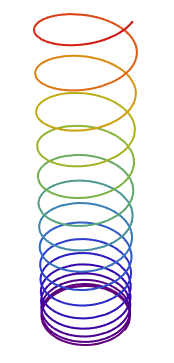
Lungs are like a slinky. If you hold a slinky in your hands vertically, the top coils will be widely
spaced out and the bottom ones will be compact. The air sacs of the lung work the same way; higher up they are overfilled with air and at the base they are tiny and densely packed. I already got this concept but I thought the slinky metaphor was easily the best way I'd heard of explaining it. This all becomes very important regarding the ventilation/perfusion (V/Q) ratio gradient in the lungs, which explains a lot of the locational specificity of certain lung lesions.

TIL: Whereas apnea is the complete lack of breathing, hypopnea is merely a reduction in airflow (and is more fun to say!). hi-POP-knee-uh!

The hypoglossal nerve (which controls the muscles of the tongue) fires very slightly ahead of the phrenic nerve (which controls the diaphragm (and thus breathing)) to get the tongue out of the way before a big breath. Alcohol delays the hypoglossal nerve from firing which can cause sleep apnea.

Thursday, May 1, 2014

WILTIMS #144: Stories to come

It's frustrating because I don't have much to show for the work I did today. I promise that I spent most of my afternoon writing and that at some point I will get to share that text with you, but not today. So I leave you with a couple neuroanatomy curios and hope to have a more post-worthy day tomorrow.

TIL: The anteriormost portion of the connection between the bulk of the brain with the brainstem, itself called the cerebral peduncles, is known as the crus cerebri. This tract contains the motor fibers that connect the motor cortices, which enable conscious awareness and planning of movement, with the spinal cord, that relays those commands, and the cerebellum, that does all the unconscious dirty work of keeping you balanced and coordinated. (all of this is super simplified)

The muscles of the face and head that can be controlled independently on one side receive innervation primarily from contralateral axons (nerves from the opposite side of the head). Such muscles include the tongue and lower facial muscles. Muscles that can only my stimulated bilaterally, such as the larynx, pharynx, palate and upper facial muscles are generally innervated bilaterally (from both sides). These rules are not very well conserved, as evidenced by weird folks (like myself) that can independently wiggle their ears.

Thursday, April 24, 2014

WILTIMS #139: Hi, my name is Christopher and I have no idea what I'm doing...

Today was my first graded mock Objective Structured Clinical Examination (OSCE), and though less than ideally organised, it was actually a lot of fun! Part of the exam entails interviewing standardized patients. These incredibly experienced actors can portray a patient for both a history and physical exam. Today, we only did the history of present illness and a social/sexual history with these actors. We practiced physical exams on each other (presumably because we are too inexperienced to bother a standardized patient with our poorly aimed prodding).

The goal today was just to practice our communication skills in the setting of an actual fake medical exam room with an actual fake patient. It was nerveracking at first but went surprisingly well. The best part was debriefing with the actors not two minutes after they were so convincingly a totally different person. That I managed to comfortably talk to an actor about his fake chlamydia shows how far I've already come in the last year.

Unsurprising fact of the day: Coffee causes and relieves headaches, depending on the dosage.

TIL: Going to Wendy's is totally good for my medical education. Apparently a former student at my school went to the local Wendy's and discovered in the wall display about Dave, the founder of the burger chain, that he had a compensated fourth cranial nerve palsy. And he actually did!

The fourth cranial nerves (or trochlear nerves) control just one muscle in each eye. If one of these nerves fails, the corresponding eye will be rotated in the socket. To correct for this, a person with a fourth nerve palsy will cock their head slightly to level out the bad eye. The good eye can adjust to this angle, but you have to maintain your head in that position in order to avoid blurred vision.

Smoking is a potent comorbidity for brain aneurysms. Smoker aneurysms are more prevalent, they grow faster, they rupture more readily, and they do worse during surgery and recovery.

Projectile vomiting is not simply puke that travels in a parabolic arc. Projectile vomiting is usually caused by increased intracranial pressure and is characterized by being a surprise to both the patient and physician. There is no nausea and no retching - just sudden, explosive vomit.

Pituitary tumors can cause bitemporal hemianopsia (tunnel vision) and diplopia (double vision), by disrupting the second and third cranial nerves, respectively.

Thursday, April 3, 2014

WILTIMS #131: I'm droopy... or have a cranial nerve palsy

I thought we already covered cranial nerves in gross anatomy all those months ago. I was wrong. Oh so wrong. The 2½ hours of lecture this morning exclusively on cranial nerves and their associated spinal cord nuclei taught me that the hours spent in gross anatomy were just a friendly introduction to convoluted roadmap of neurons that control an enormous amount of the head and body from a scattered core of seemingly indistinguishable spinal cord chunks. An we still have several lectures to come on eyesight and the optic nerve (CNII).

This afternoon we had a fantastic lecture on the ethics of procreation and genetic testing by this guy. He managed to quickly and objectively sum up the arguments from everything from abortion to cloning to "designer children." One of the more interesting points was on the future of certain technologies and their impact on the long held ethical beliefs of all parties involved. How does the debate over abortion change one we create the artificial uterus? That's not ridiculous to think about considering how medical science has continued to push back the limits of premature viability and push forward in vitro early embryonic development.

TIL: One of the cranial nerve exams is to have the patient sick out his or her tongue. If it deviates to the right, either the upper motor neuron of the left hypoglossal nerve (CNXII) or the right lower motor neuron has been damaged.

Along the same theme, because the upper portion of the face is innervated by both sides of cranial nerve VII but the lower muscles of facial expression are innervated purely contralaterally (from the opposite side), if you have a left upper motor neuron lesion you will have a droopy lower right face, while a lower motor neuron lesion will result in a Bell's palsy (half face droopiness) in the ipsilateral side.

If one of the abducens nerves (CNVI) is damaged, it will result in double vision that resolves if the patient turns his or her head. The troclear nerve (CNIV) also causes double vision when damaged resulting in a short of twisting of the eye within the socket. Patients can cancel out the distortion by awkwardly tilting their heads.

"Brain birth" is a concept analogous to brain death accepted by some proponents of abortion rights that states that, just as adults who have been rendered irreparably unconscious are declared legally dead before their heart and lungs have stopped working, unborn fetuses should not be considered alive until the brain had developed enough to be meaningfully useful.