Showing posts with label microbiology. Show all posts

Friday, January 23, 2015

WILTIMS #242: Boop!

I'm a bit behind this week entirely because I was waiting to insert these pics/gifs. You're welcome.

TIL: Burkholderia cepacia is a nasty bacterium that causes infection in the lungs of vulnerable patients, especially those with cystic fibrosis. Cystic fibrosis causes dangerously thick and abundant mucus secretions which can block the airways of the lungs. The lungs can't clear the blockages and opportunistic bacteria thrive in the moist tissue behind the mucus plugs, causing all manner of havoc. B. cepacia is very resilient and can be a life altering infection for CF patients. Fear of this infection is so great that affected patients may be shunned from CF support groups because its so dangerous to the other CF patients.

Bronchiolitis obliterans organizing pneumonia is my favorite disease of this respiratory block thanks to its wonderful abbreviation, BOOP. Hopefully, no one has ever been told by a barely straight-faced doctor, "After reviewing the tests, we think that you can be diagnosed with... [suddenly the doctor's voice jumps up by an octave] BOOP!" Bronchiolitis obliterans can actually be a very severe condition marked by the gradual occlusion of terminal bronchioles by fibrotic inflammatory tissue. But thanks to the internet, all I can think of when it's brought up is:


Thursday, November 20, 2014

WILTIMS #216: "P"s get MDs

Hopefully you correctly interpreted my week of silence as: EXAMS! This round of 7 hour testing was exclusively microbiology and antibiotic pharmacology. And assuming my math is right and I didn't catastrophically fail a miniboard exam, I think I'm finally done with micro!

Our micro professor after the final, celebrating with the home-brew we started during fungi
This marks a fun transition in our curriculum for pathology too. Up to this point we have mainly been studying "general principles" of medicine: inflammation, principles of cancer, anemias, etc. Now begins the organ systems: cardiovascular, renal, reproductive, etc. Today we started cardio and it was lovely. It felt like back in anatomy or physiology, when we were learning big, impactful medicine that was complex, but able to be reasoned-out. It is really hard to put this feeling into words...

It's not that the things we learn in biochem or the immunological parts of micro aren't important - in aggregate, all the tiny malfunctions of our biological underpinnings add up to untold suffering and death at the population level. But once you understand the cell biology involved, each of those conditions boils down to a very simple, typically unfixable problem - this enzyme doesn't work, that protein doesn't fold properly. Those tiny changes can have huge system-wide consequences, but because of how many of them we need to get through, we have to move on before discussing the complex treatment of and interplay between the larger effects.

When we deal with things on a organ system basis, we actually have time to riddle-out, not just that there are downstream effects, but how their nature changes given the disease process. It may just be the way I'm wired, but I love the diseases that result from entire organs failing. It reminds me that the entire body is actually connected; that it is a giant, moving, ever changing puzzle and we get to try to put the pieces back together.

TIL: Oxygen takes up 21% of the dissolved space in blood. That is exactly the same as the percent oxygen in the atmosphere. This makes some sort of very, very long term evolutionary sense.

Lovingly borrowed from WebMD
Bicuspid and unicuspid aortic valves can lead to aortic stenosis. The heart has four valves and they're all a little different. The aortic valve normally has three cusps (tricuspid) but there are rare birth defects that result in bicuspid or, far less commonly, unicuspid aortic valves. One of the main problems with this birth defect is that that the valve doesn't open as well which prevents blood from leaving the heart efficiently. This makes the heart work harder and can lead to several serious complications including left ventricular hypertrophy, where the left ventricle grows super big to compensate. But, this compensation usually does more harm than good in the longterm.

Mitral stenosis (hardening of the heart's mitral valve), has a "fish mouth" appearance upon gross examination.

Monday, October 20, 2014

WILTIMS #200: Writings, reminiscence, and zombie amoebae

Bicentennial post! My blog now has as many med school posts as the US had years of existence in the seventies! That's a terrible comparison but I'm going to run with it. Both started at dubiously defined times (US: Declaration of Independence vs ratification of the Constitution; WILTIMS: move-in week rather than day 1 of classes), both didn't align with the larger time division (US: 200yrs in 1976; WILTIMS: #200 in October), and both very nearly didn't make it this far (US: Civil War; WILTIMS: neuro... ugh neuro). And yet, here we are!

Amusingly, today was the release date of our school's student journal the Quill & Scope in which my remarks from the Convocation of Thanks were reprinted. That was one of my most meaningful moments of the past 200 school days and it was all thanks to this blog. Writing every day, even if it's only short paragraphs filled with sesquipedalian (needlessly multisyllabic (apparently there is no word for this that isn't self-descriptive)) scientific words, is the only reason I was able to write that piece (though clearly I haven't learned to control my use of parentheses (or irony)).

A second throwback milestone for the day was learning in pharmacology about the chemotherapy that I was taking just over two years ago. It was very surreal watching classmates take notes on the symptoms that I knew - and still remember - all too well. Nausea is three-pronged: pre-treatment, acute, and delayed. Hair-loss sucks. We were told that low blood cell counts can leave you immunocompromised or anemic, but they didn't mention the psychologic distress of waiting for permission from the lab tech to get the treatment you hate.

I am still so glad I wrote about chemo as I was going through it because, as we broach these topics as student clinicians, I can integrate my experiences with my medical education and that of my friends. Also, I have a head start on the material!

TIL: Naegleria fowleri is a single celled parasite found in warm freshwater that will eat your brain! These creatures get into your head when the unsuspecting swimmer gets water way up his or her nose. The amoeba then burrows up through the very thin cribriform plate of the skull and starts munching on the brain. The amoebae don't want or need to live off of a human host, but when life gives you brains, make brain-ade? Unfortunately for us, infections are almost always fatal.

Alkylating chemotherapy agents are derived from the chemicals in mustard gas from WWI. Well, it does kill cells.

Monday, October 13, 2014

WILTIMS #197: Mmm mmm, parasites!

We started a new section on microbiology today with lectures on parasitology. The two main types of medically relevant parasites are so different from each other that it's amazing they are associated. Whereas the various bacteria I've talked about in the past few weeks are all fairly closely related, protozoa and helminths are in different kingdoms. In a well played joke, our professor pointed out that helminths are more closely related to parasitic members of congress (or any of the rest of us) than to protozoa.

TIL: Mycobacteria are tiny - so tiny in fact that they were once thought to be viruses. One of the benefits of their diminutiveness is that, unlike typical bacteria, they don't have a cell wall and are thusly resistant to antibiotics that target cell wall formation such as penicillins, cyclosporins and vancomycin.

Tetracycline antibiotics are not recommended for pregnant women and children younger than 9 years old because they will stain a child's still-implanted permanent teeth gray.

Superinfection is super-awful. That's the term for when you already have one infection and, before you've had a chance to recover, you get a second one. We see this with things like C. difficile where the patient is being treated for one infection and the prescribed antibiotics allow for C. diff. to rear its "difficult" head.

Another example of superinfection we learned of today is when the parasite, Strongyloides stercoralis or threadworm, causes repeated infection in its host through autoinfection. Normally, roundworms transmit to new hosts by releasing eggs through the feces of their current hosts. But threadworms jump the gun and develop to the infectious larval stage before they are excreted... meaning that they can chew into the colon and/or anal region of the host that is already infected.

Sorry about that last tidbit... and just be glad I didn't share any pictures.

Thursday, October 9, 2014

Bonus Post: Dancing the night away

I once again forgot to mention in yesterday's post that I have a couple extra days off this week due to some lesser known Jewish holidays. In fact both this week and next week I have 4-day weekends, so there will be a few fewer WILTIMS posts in the near future. But to make up for my lack of warning, here's a bonus fact:

TIL: St. Vitus is the patron saint of actors, dancers and epileptics. Why would I bring this up? In order to be given a diagnosis of rheumatic fever, which is caused by a systemic infection of Streptococcus pyogenes, the patient is required to present with at least 2 major symptoms or one major and 2 minor symptoms from the Jones criteria. The major symptoms (as listed in the order of a cute mnemonic) are:

  • Joints (polyarthritis)
  • (carditis)
  • Nodes (subcutaneous nodules)
  • Erythema marginatum rash
  • Sydenham's chorea
That last one is the modern term for a neurologic condition involving uncoordinated movements of the limbs. The old name? Saint Vitus Dance.

WILTIMS #196: Known unknowns

Today was a lecture-free day, with 3+ hours of micro lab followed by two more of nutritional pathology case studies. The former was work-intensive and ended with the assignment of "unknown" samples for each student to identify by next week. This, though a little gimmicky, is one of my favorite activities for any lab class because it proves that each of us has actually learned some set of identifying procedures (that we may never be called upon again to physically perform, but still).

TIL: I have a knack for spotting barely something floating in a sea of almost nothing.

An array of TSI test results from Wikipedia
The TSI slant is a very useful test for differentiating between gram-negative bacteria. It uses a diagonally set gel to demonstrate the sugar fermentation, iron oxidation, gas production and aerobic/anaerobic properties of each bacterium. The top, slanted portion is appropriately called the slant while the bottom is the butt. When you are talking to each other about stabbing the butt, context is everything.

If the gel turns yellow it indicates the production of acid through fermentation of one or more sugars. Black indicates the reduction of thiosulfate and production of ferrous sulfide. Bubbles or raising of the agar indicates hydrogen gas production.

Friday, October 3, 2014

WILTIMS #192: Carrier has arrived

Staph. aureus from my nose!
Some weirdly stained microbe from my throat
Only 2-3 of the 23 people in our small micro lab should be nasal carriers of the sometimes dangerous but hopefully harmless Staphylococcus aureus species of bacteria. And I was one of the lucky few! Woohoo? You can see my beautiful clustered spheres in the first of my three microscope cellphone pictures on the left.
Another unknown microbe from my throat

S. aureus is the same microbe that can become MRSA, the deadly antibiotic-resistant infection often picked up in hospitals.

TIL: Plague is passed on by flea throw up from when the rapidly multiplying bacteria block the flea's mouth-straw-appendage and it is forced to cough to clear its throat-straw-thingy at the beginning of the next feeding. This transmits the plague-causing bacteria to the next host.

Thursday, October 2, 2014

WILTIMS #191: Ready for me to pick your nose?

Does that say sheep blood? Yes, yes it does.
Today we finally had a "wet" lab in microbiology, wherein we cultured actual bacteria on various media. We also learned (or relearned) how to do a Gram-stain and tried to use this technique to identify bacteria swabbed from our own throats and noses. There were definitely things there, but nobody had any idea what they were. Tomorrow, we'll get to see the results of the cultures we grew overnight. Now we're all hoping we aren't the ones carrying the most bacteria or one of the 2-3 individuals in each lab predicted to be carrying slightly scarier infections like S. aureus.

TIL: Lyme disease is only found in the northern hemisphere and then over 80% are in the New England and the mid-atlantic states. This bacterium is spread by tick bites but humans are only an incidental host, with the primary host being different depending on the species of tick. Part of the reason for the regional variation in incidence is that there are different dominant species of tick outside of the highly affected states.

Cases of Lyme disease by county, 2012

One of my microbiology professors knows very little US or world geography. Can you spot Virginia?

Tuesday, September 30, 2014

WILTIMS #190: Raise shields!

Today was a very lab/practical heavy day, so I didn't learn much in the way of interesting factoids, but rather reinforced things from previous days. But in preparation/procrastination for tomorrow, I did learn something:

TIL: One of the ways of describing the bacterial colony feature of elevation, or the raised/flattened appearance of the colony, is the term umbonate. Umbonate comes from the latin root umbo which describes a "boss," or raised bump on a shield. This is the same ultimate root as the modern word emboss, which took a detour through French before becoming part of the English lexicon.

A boss on a shield

Thursday, September 25, 2014

WILTIMS #188: The Importance of TB-ing Dermis

TB-associate lesions in a
 3000-3500 year old egyptian mummy
We have entered that part of the year where, thanks to our affiliation with a predominantly Jewish institution, we get three four-day weekends in the next month. To make up for this, it seems like our classes have tried to put as much material as possible in our reduced class time. Unless I'm feeling unusually motivated, all of this means there will be a few fewer posts in the coming month. But today's is good enough to make up for the next couple days:

TIL: Though we've only been exposed to viruses like ebola and HIV for the last half-century, we have, as a species, been battling bacterial infections like tuberculosis (TB) since ancient times. Leprosy has been explicitly mentioned in historical and religious texts, and TB has been diagnosed both macro- and microscopically in mummified remains from ancient Egypt. Only now, 3-4,000 years later are we finally turning the tide.

Armadillo PSA: There's no
armor for leprosy; get tested.
Mycobacterium leprae, the bacterium that causes leprosy, is the slowest growing pathogen known. It doubles every 14 days (that's in comparison to every 20 minutes for E. coli). It also only grows in humans, mouse footpads and armadillos. Because M. leprae prefers the cooler tissues of the body (similar to the normal temperature of armadillos) it often causes lesions on the skin and in peripheral nerves. Untreated, this disease is gruesome. And because of the resilient ancient stigma associated with it, there has been a campaign to rename it Hansen's disease so that people will come get treatment before suffering the more deadly and debilitating consequences of the infection.

Lady Windermere syndrome is caused by an opportunistic infection of mucous buildup in the lungs by Mycobacterium avium-intracellulare. The name comes from an Oscar Wilde character who was a very proper English lady. Though, as defensive librarians have pointed out, her character was never actually sick in her eponymous play, the reference hints at the cause in real people. A proper lady is not supposed to cough in front of company, and the only otherwise healthy people who develop this syndrome are older women who, it is hypothesized, learned to always suppress their cough reflex and thus built up collections of mucus in their lungs for this obscure bacterium to grow in.

M. marinum a fresh and salt-water bacterium that causes "fish tank granuloma."

Tuesday, September 23, 2014

WILTIMS #186: Shooting starter colonies

Listeria comet
TIL: Listeria comets are super cool (if you don't have them streaking through your intestinal epithelium). This bacterium likes to live inside the cells of the lining of the gut. It uses a potent one-two punch of toxins to burst through the vesicles that cells use to scoop up and destroy offensive organisms. Once in the cell, listeria hijacks some of the cell's scaffolding machinery and redirects it to quickly polymerize in the direction of the cell membrane. This streak is called a listeria comet and it's so strong that it can puncture the adjacent cell's membrane. From there, the bacterium needs only to reactivate its toxic tools to degrade the lipid layers surrounding it and start the process all over again.

This process allows listeria to spread completely unseen by the body's adaptive immune response, by never needing to exit its cellular hiding place to spread or replicate.

Next, C. difficile infections are almost entirely caused by antibiotics. And by that I don't mean that we are injecting people with bacteria or anything, but rather that a side effect of even the most appropriate antibiotic usage can be a gastrointestinal infection from this annoying (and sometimes deadly) bug. It's weird looking back at incidence rates from before and after widespread antibiotic use, because the correlation is very apparent. In fact, scientists originally hypothesized that the antibiotics themselves were the cause of the diarrhea sometimes seen upon their administration.

C. diff is commonly found in small numbers in a large percentage of the population, but it can never really get a foothold thanks to our existing gut microbiota. The problem arises when we wipe out the healthy bacteria while treating some other infection elsewhere in the body with antibiotics. This gives c. diff the chance it needs to assume a bigger and more pathogenic role in the intestines. 

Lastly, most STDs grew in prevalence from the 60s through the 70s. Then the rates of new infections stopped abruptly in 1980. The reason? Fear of the growing AIDS epidemic forced people into practicing safer sex.

Saturday, September 20, 2014

WILTIMS #185: Revenge of the outcasts!

After seven hours of three horrific tests yesterday, we started up again bright and early this morning. Thankfully, in my humble opinion, we are starting the actual microbiology portion of our microbiology course, having wrapped up the immunology section. So, to celebrate the end of ridiculous detail (I'm looking at you, cytokines!), this post will be about a fairly broad idea.

Why do bacteria cause diseases? This may seem obvious, but hear me out. Viral diseases make sense: viruses depend on infecting and lysing cells for reproduction. But bacteria can live without our cellular machinery, so why evoke the wrath of the immune system by picking a fight with the local cells?

Well, first of all, many bacteria don't! These are the commensal bacteria that make up 90% of the cells in "our" bodies*. We love these guys because they do a couple important things for us. Some bacteria help us digest and/or absorb things that we can't easily digest and/or absorb on our own. But more importantly, all commensal bacteria help us out by outcompeting pathogenic bacteria from their niches. And this is the big hint as to why other bacteria need to cause disease.

Essentially, these other bacteria know (evolutionarily, not literally) that they can't win when playing by the same rules as those other extremely well adapted commensal bacteria. So, they change the rules. What do these bugs need to flourish? Water, nutrients, and hopefully a route to move on to other organisms. A great way to get these things is to make the body bring it to you through the well-intentioned but often overzealous actions of the immune system.

In broad terms, the immune system frequently starts it's fight by bringing in reinforcements in the form of immune cells riding a wave of fluid through leaky blood vessels. This fluid gives the bacteria the water it's hoping for, while the damaged cells of the surrounding tissue leak nutrients providing a great environment for the critters to multiply and thrive. If they flare up big enough to cause coughing, sneezing, diarrhea, sores, bleeding, or death, then they can spread to other people and start the cycle anew.

So bacteria often cause disease because all the peaceful positions are usually taken and you either die by the system or break the system in order to survive. 

TIL: Streptococci like to grow in chains, pneumococci in pairs, staphylococci like clusters, and enterococci can do pairs or small clusters.

* They make up 90% of the number of cells not the volume of cells; most prokaryotic cells are very small compared to those of eukaryotes. To give perspective, some bacteria can live inside our cells and some eukaryotic organelles, like mitochondria and chloroplasts, are thought to be very old intracellular commensal organisms that were so symbiotic that we essentially annexed them.

Wednesday, September 3, 2014

WILTIMS #176: Vaccines PLUS

Today we started off with a series of lectures on congenital and genetic diseases which, though informative, were not super big on interesting anecdotes. The last lecture was on vaccines and it was actually pretty cool to approach this topic now that I know a little more about the immune system. If you want my views on vaccine safety etc, please see my previous post on the subject, or any of the countless reputable online resources on the subject or [in pharma advertisement voice] talk to your doctor.

Cowpox on the hand of the milkmaid, Sarah Nelmes
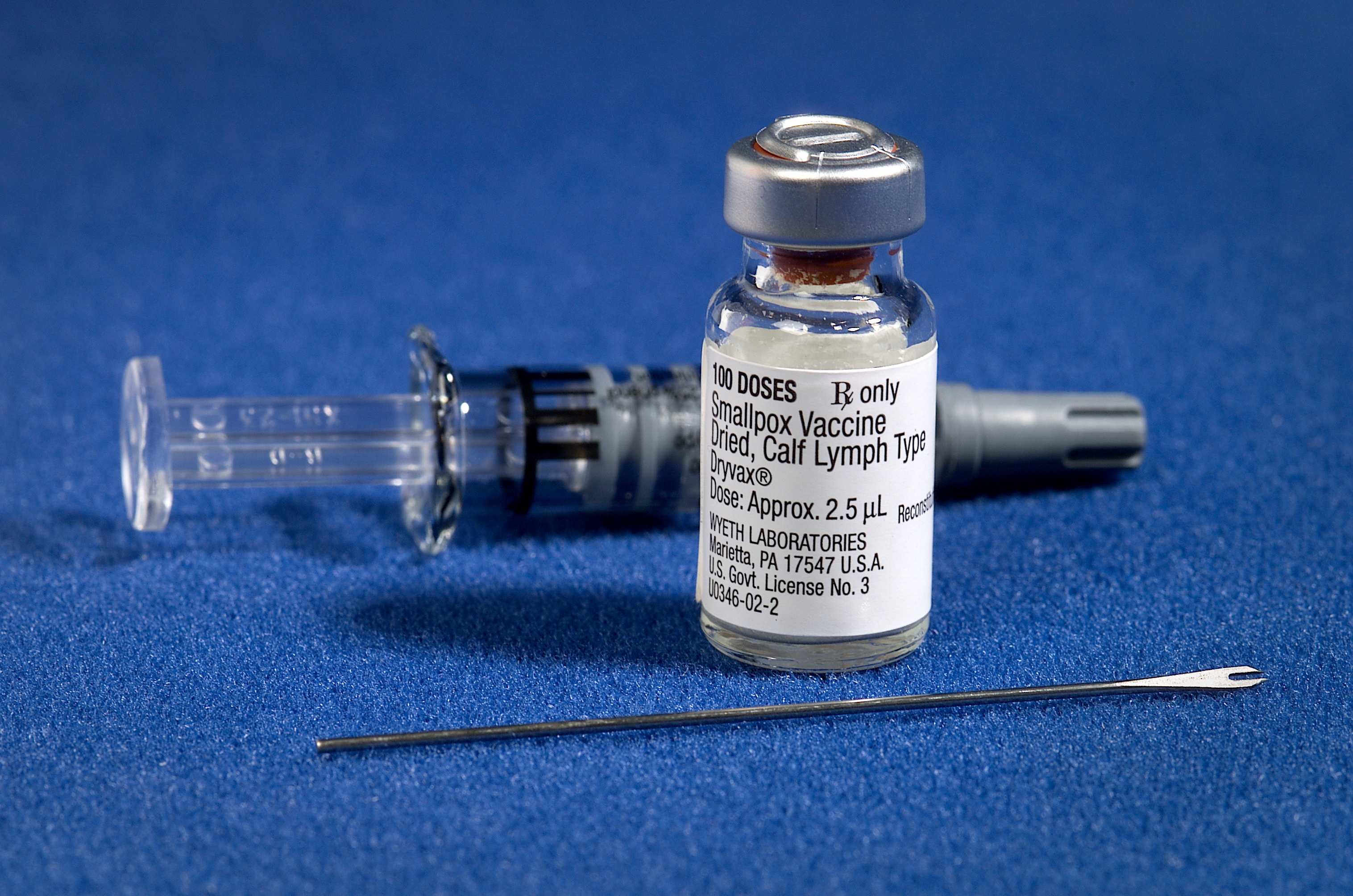
First a little set-up from things we learned last year: The most famous example of vaccine development is that of the smallpox vaccine in 1796 by Edward Jenner, with the help of an unconsenting minor, a milkmaid, and Blossom the cow. Jenner (and several other people at the time) noticed that milkmaids that had been exposed to cowpox (similar to smallpox but much less virulent in humans) had little to no reaction to exposure to smallpox. Being the good, if less-than-ethical scientist, Jenner needed to test that this exposure was key to their immunity, so he did the obvious thing and tested it on his gardener's 8 year old boy. After inoculating him with cowpox pus from a milkmaid (who was infected by Blossom), the boy was exposed to smallpox and thankfully never developed the disease.

TIL: The idea behind the cowpox-smallpox vaccine is that, since cowpox is similar to smallpox, but not very good at attacking humans, the immune system will easily combat the disease and store up weapons in the adaptive immune system that can attack either virus equally well in the future.

Attenuated vaccines use the same approach. Scientists take a nasty human pathogen and grow it in cells from another species, like monkeys. The virus/bacterium mutates over many generations until it is better at infecting monkey cells. Hopefully, these changes came at the price of the bug losing its virulence towards humans. This is the equivalent to turning smallpox into cowpox to give the immune system an easy practice target. Attenuated vaccines are generally not used with immunocompromised patients because in very rare cases, the patient can develop the full blown disease if a few of the mutated viruses/bacteria mutate back. This is not a problem with immunologically healthy people.

Adjuvants are another group of compounds about which you may have heard when talking about vaccines. These are substances are added to vaccines to get the immune system to treat your fake threat seriously. Since non-attenuated vaccines are usually composed of just a small piece of a surface protein of the targeted virus/bacterium, the immune system will recognize it as foreign and log it as a possible danger. But the immune system is also smart enough to look around and see that none of the other markers of an infection are present, so it will hold back its biggest weapons for more seemingly serious threats. So scientists add compounds that mimic (or are straight-up copies of) parts of other real threats to trigger a proper immune response that will give the vaccine material the welcome it deserves. These adjuvants often include an aluminum salt or some lipid-like organic molecule.